The Design Brief® | History Series: American House Styles

©️ Dakota Design Company 2017-2026 | All rights reserved. This content may not be reproduced, distributed, or used without permission.
WRITTEN BY DR. GLORIA for DAKOTA DESIGN COMPANY
It is important for designers to recognize house styles in order to coordinate interior styling with exterior design. It would be inappropriate to style the interior of a mid-century modern home with pieces referencing Georgian design, or to use French country furniture in a Mediterranean home. Below is a comprehensive description of many of the house styles found in the United States.
Many of the house styles listed below overlapped with each other timewise, in the periods of their popularity, so the order they appear below is not strictly chronological.
Roof Styles
Before delving into the styles, first, let’s define a few roof styles commonly associated with various historic house styles.
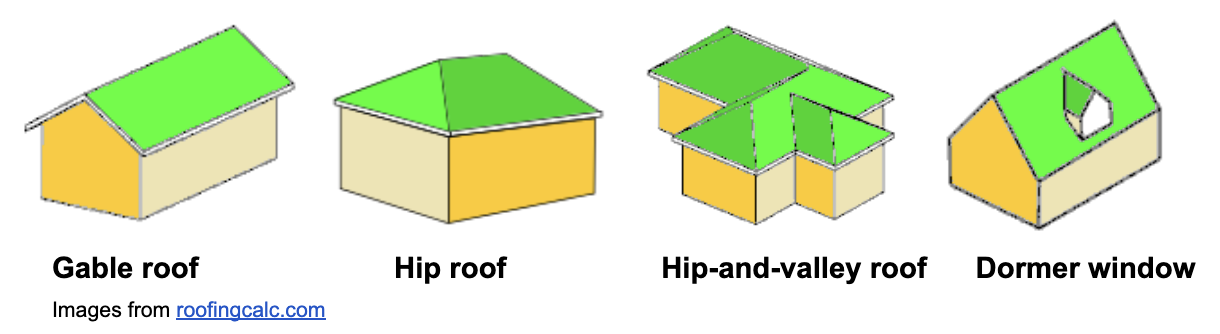
A gable roof is the simplest roof type. It is a two-sided roof with a slope on both sides.
A hip roof is a four-sided roof, with four sides being sloped. A building plan that is more complex than a simple rectangle will have a hip-and-valley roof. Any of these roof types may have a dormer window—an upper-level window protrusion extending from a slanted roof.
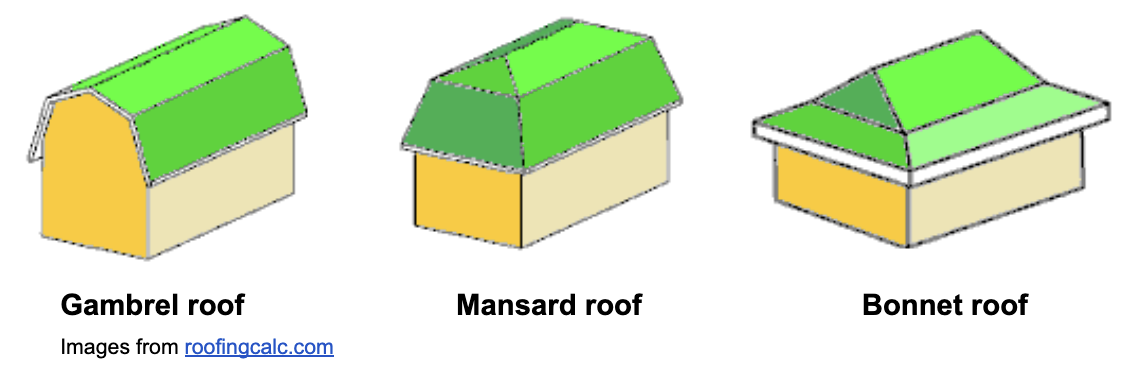
A gambrel roof is like a gable—a two-sided sloped roof—but each side with two different degrees of slope, steeper at the lower portion, and less sloped at the upper portions. This roof type originated with the Dutch, and is very often used on barns. A mansard roof is a French style. The folklore is that, in France, portions of a home under the roofline were not subject to property taxes, so architects cleverly designed a roof type that encompassed the entire upper story, thus avoiding taxation on that story. A bonnet roof is a variation of a hip roof, but with a low slope at the lower portion of each of the four sides, and higher-pitched slopes at the upper portion. Often used in hot climates, the purpose is to provide shade from the roof to a wrap-around porch.
Cape Cod House Style
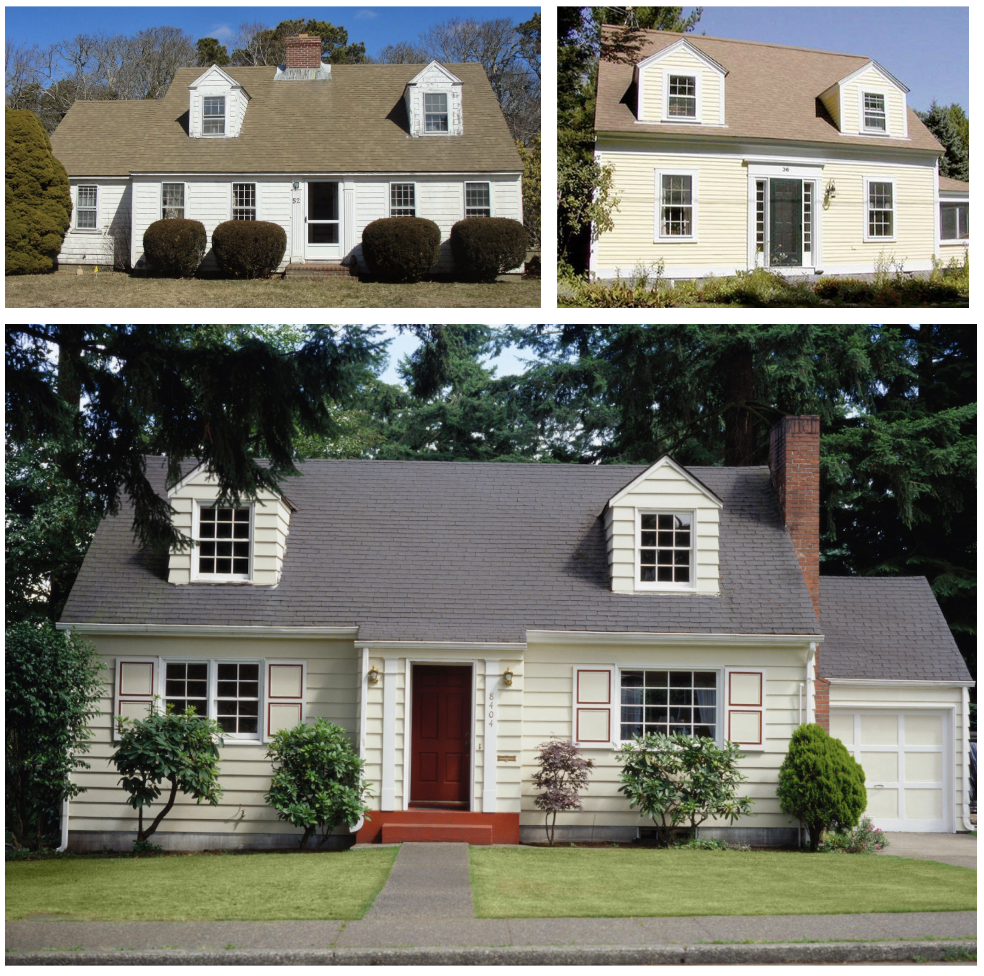
Cape Cod style homes can be found throughout the country, but in colonial times, it was a style used by the British colonists who settled in the New England area of the upper northeast. It is a simple style to build, with a rectangular footprint, a gable roof, and a center entrance door. Often, there are dormer windows on the upper level. Twentieth-century versions will often have a garage added to the side.
In earlier times, before it was possible to manufacture glass in larger pieces, separate small glass pieces were connected by small wooden pieces, or muntins, creating a grid-like, multi-pane window style. In double-hung (or double-sash) windows, as used on Cape Cods, the number of panes on both the upper and lower sashes identifies the window type. Below are images of six-over-six and a twelve-over-twelve divided lite windows.
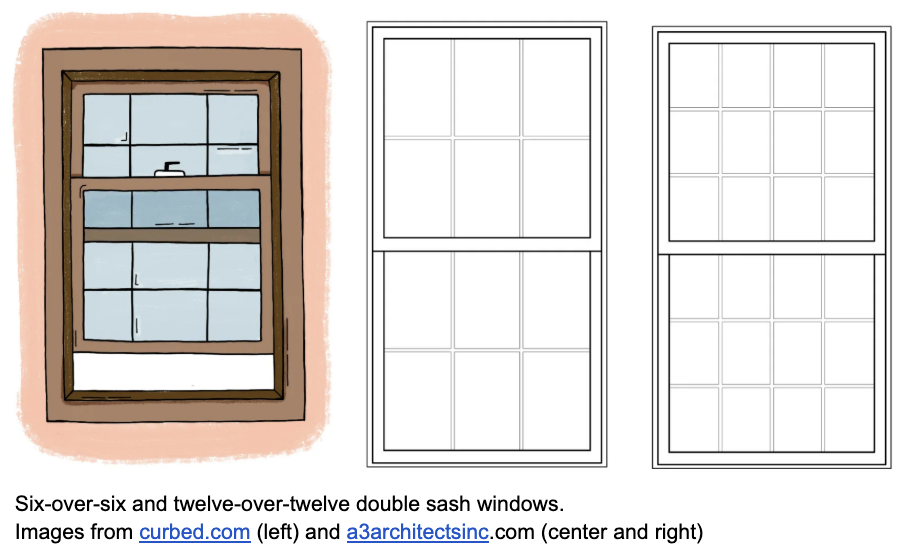
Today, divided lite windows are not actually comprised of separate glass panes. Instead, a single pane of glass is overlaid with a muntin pattern, creating the appearance of a divided-lite window.
Saltbox House Style
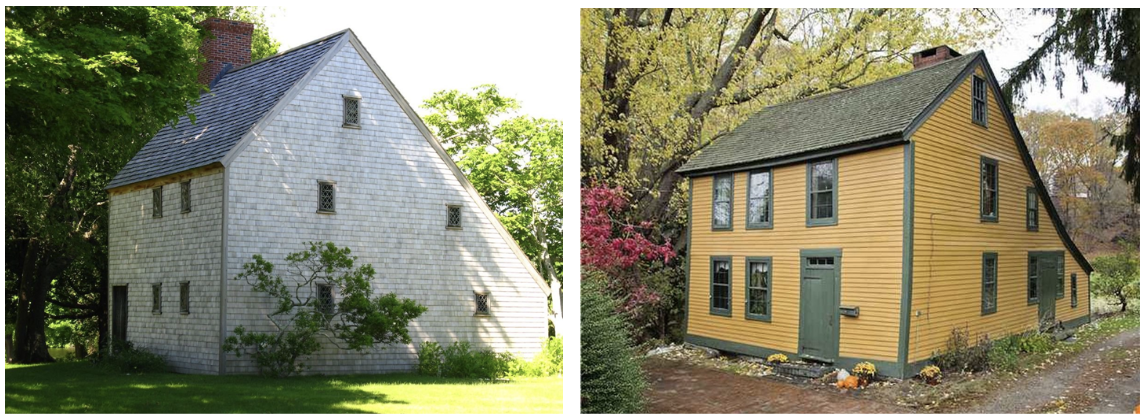
The saltbox house style was also originally built in the New England region of colonial America. Named for the shape of the container used to hold salt, this style features a steeply sloped gable roof that helps shed heavy snow. Often, these homes began as symmetrical two-story structures, but as families and their space needs expanded, one-story additions were added on one side, necessitating an asymmetrical roof.
Dutch Colonial House Style
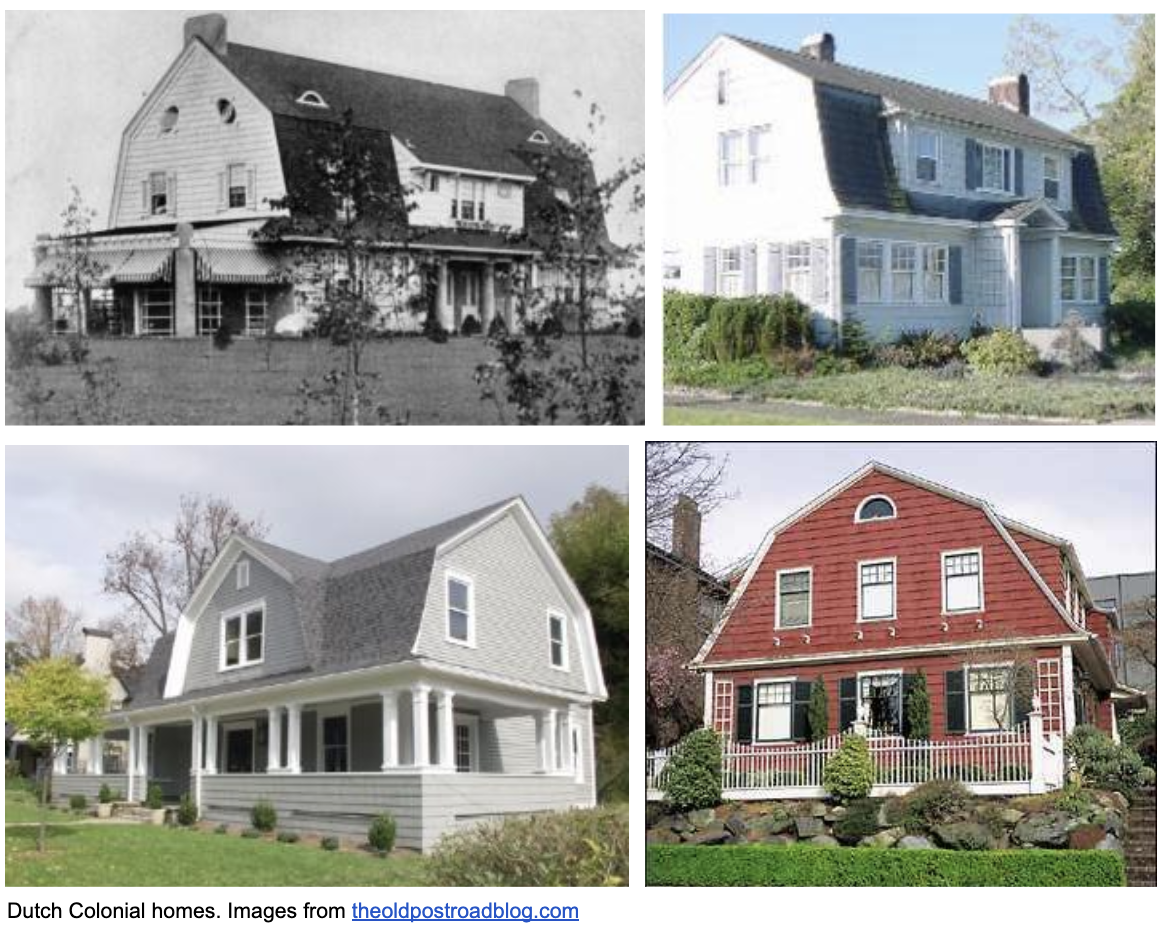
This house style was originally built in Pennsylvania, New York, Delaware, New Jersey, and Connecticut—areas where Dutch immigrants (from The Netherlands, also known as Holland) settled. The Gambrel roof is the most distinctive feature. Dutch Colonial-style houses may or may not have a covered porch or dormer windows. Later, this home style was replicated across much of the northern, mid-Atlantic, and midwestern portions of the country.
Classical Elements: Georgian, Federal, Colonial Revival, and Greek Revival Homes
During the later part of the 18th century (the late 1700s) and early in the 19th century (early 1800s), there was a renewed interest in the classic design elements of the ancient Greeks and Romans, which had taken place centuries earlier (several hundred years before and after the birth of Christ). There are several similar house styles that utilized classical architectural elements from ancient cultures. These highly related styles are difficult to distinguish from one another. The Revival styles came later, during the late 19th and early 20th century, when another wave of interest in the classical styles emerged. Each progressive style became increasingly elaborate.
Georgian House Style
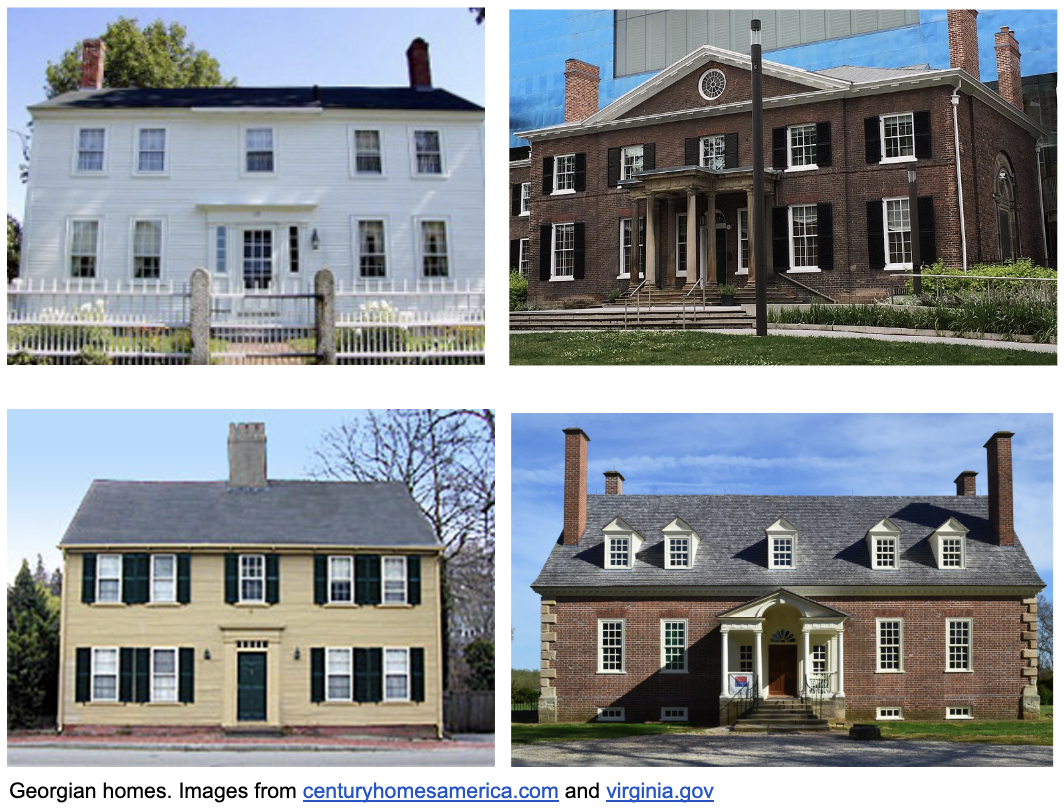
Georgian-style homes were rectangular in footprint, two-stories high, with symmetrical front facades and the entrance door centered. The entry door was highly emphasized as the focal point, framed with classical details such as a pediment (triangular feature above the door) or a cornice. Flanking the front door may be pilasters (flattened, square columns), decorative moldings, or side windows (called side lites). There may be a transom window above the front door.
Typically, the front facade included five windows across the upper story, and, on the main story, two windows on either side of the door for perfect symmetry. Exterior materials are either painted wood clapboard siding or red brick. There may be shutters, typically black, on all the front windows.
Federal House Style
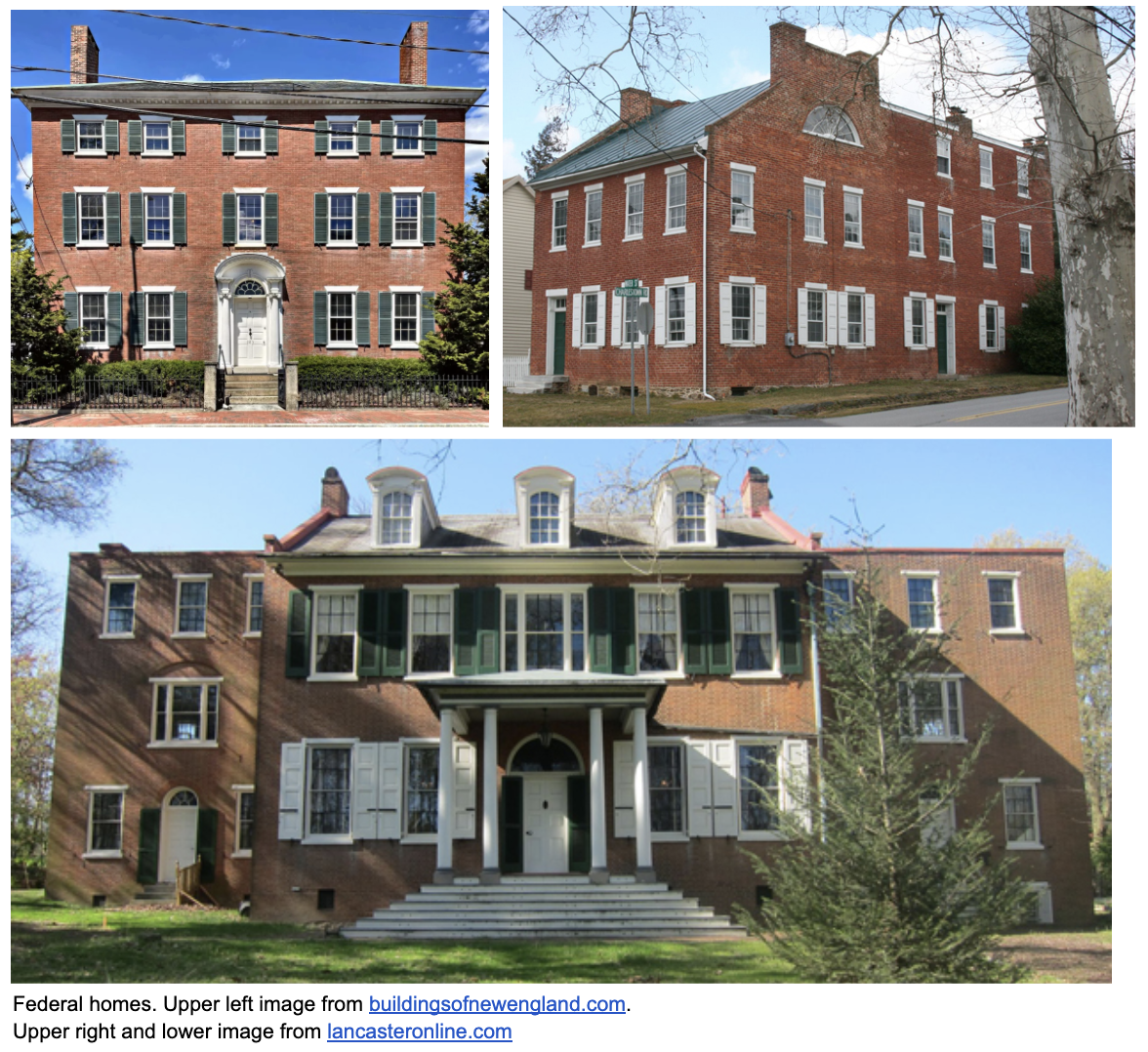
It is difficult to distinguish a Federal (or Federalist) home style from a Georgian one. The difference is in the details. In the Federal style, there is less rigidity with regard to symmetry. While Georgian homes are square and angular, a Federal-style building is more likely to feature curved lines and decorative flourishes. And there may be elements that were not strictly derived from the Greeks and Romans, such as an arched (or Palladian) window, a feature of the Italian Renaissance. There may be a semicircular fanlight over the front door. A Federal home may have a third story, and the roof slope will typically be lower-pitched than that of a Georgian. The Federal style is more likely to include a portico (a small front porch with a roof and columns). Shutters may be solid rather than louvered.
Colonial Revival and Greek Revival Homes
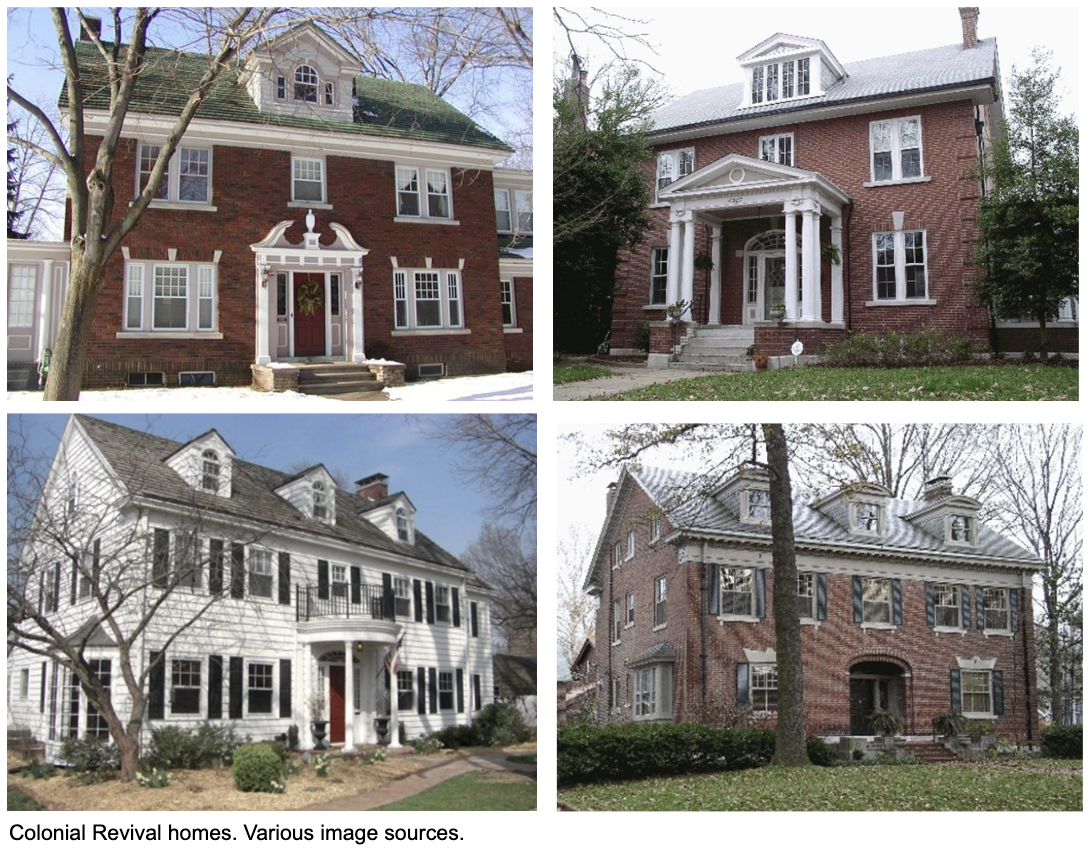
These revival styles occurred later in history, during the late 19th and early 20th centuries, when there was renewed interest in Georgian-style architecture. The Colonial Revival style is based loosely on Federal and Georgian house styles and was a clear reaction against the excessively elaborate Victorian architecture of the time. Colonial revival homes are symmetrical, but not rigidly so, allowing for side extensions.
As with earlier Georgian-style homes, Colonial Revival homes were built around a center-entry hall floor plan, with a symmetrical brick or wood-sided facade. The structures were two or three stories, and often had dormers in the upper story. The windows were multi-pane (or used faux muntins to create the look of multi-pane) double-hung windows with shutters. The center entry door was very strongly emphasized with a pediment, or broken pediment above, and a roofed portico with columns may also be included. Doors were paneled and often included sidelites, or may be topped with rectangular transoms or fanlights.
A Greek Revival style home also emerged in the late 19th and early 20th centuries. The key identifying characteristic is the look of a Greek temple, with tall two-story columns, and a pediment (the upper triangular feature) above. Usually, these buildings are white, to emulate the white marble used by the ancient Greeks.
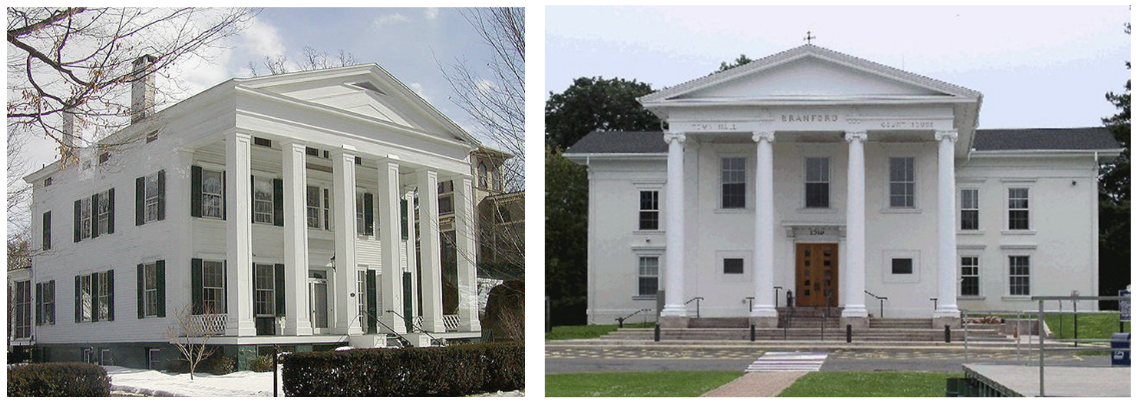
The north facade of the White House is Greek Revival style.

Victorian Homes: A Wide Range of Styles
The Victorian era is named for Queen Victoria of England, who reigned from 1837 to 1901, but the Victorian style occurred during the later part of her reign, and immediately after her death. The Victorian style era was long, and produced several sub-design eras such as:
Gothic revival
Second Empire
Stick Style
Romanesque
Queen Anne
Shingle
Folk Victorian
This was the time of the Industrial Revolution (also called “Machine Age”), where trim pieces and detailed moldings, as well as furniture, were mass-produced in factories, rather than being hand-carved, making them much more affordable. Rail infrastructure crisscrossed the nation, making it easier to deliver materials to the masses at a much lower cost by train. So, homeowners of modest means were able to afford more elaborately designed homes than ever before.
Commonalities of all the Victorian style varieties are:
Irregular, asymmetrical footprints
Steep, gabled roof
Overhanging eaves
Decorative braces, brackets, and corbels
Ornamental tracery (also called Gingerbread)
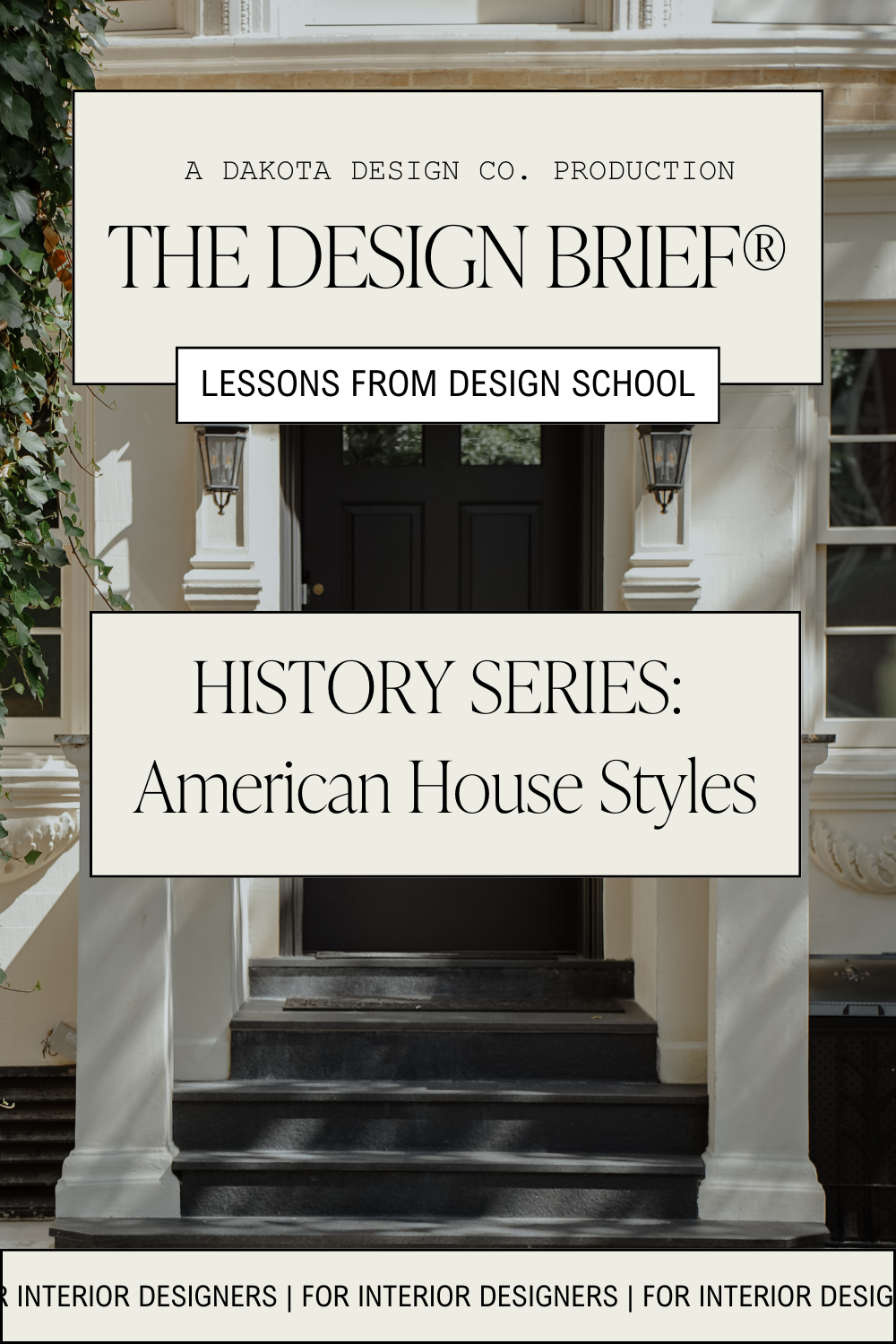
Gothic Revival Victorian
The distinguishing feature of this type of Victorian is the tall windows with pointed arched tops, as used in Gothic churches of the Middle Ages. These homes have a church-like look.
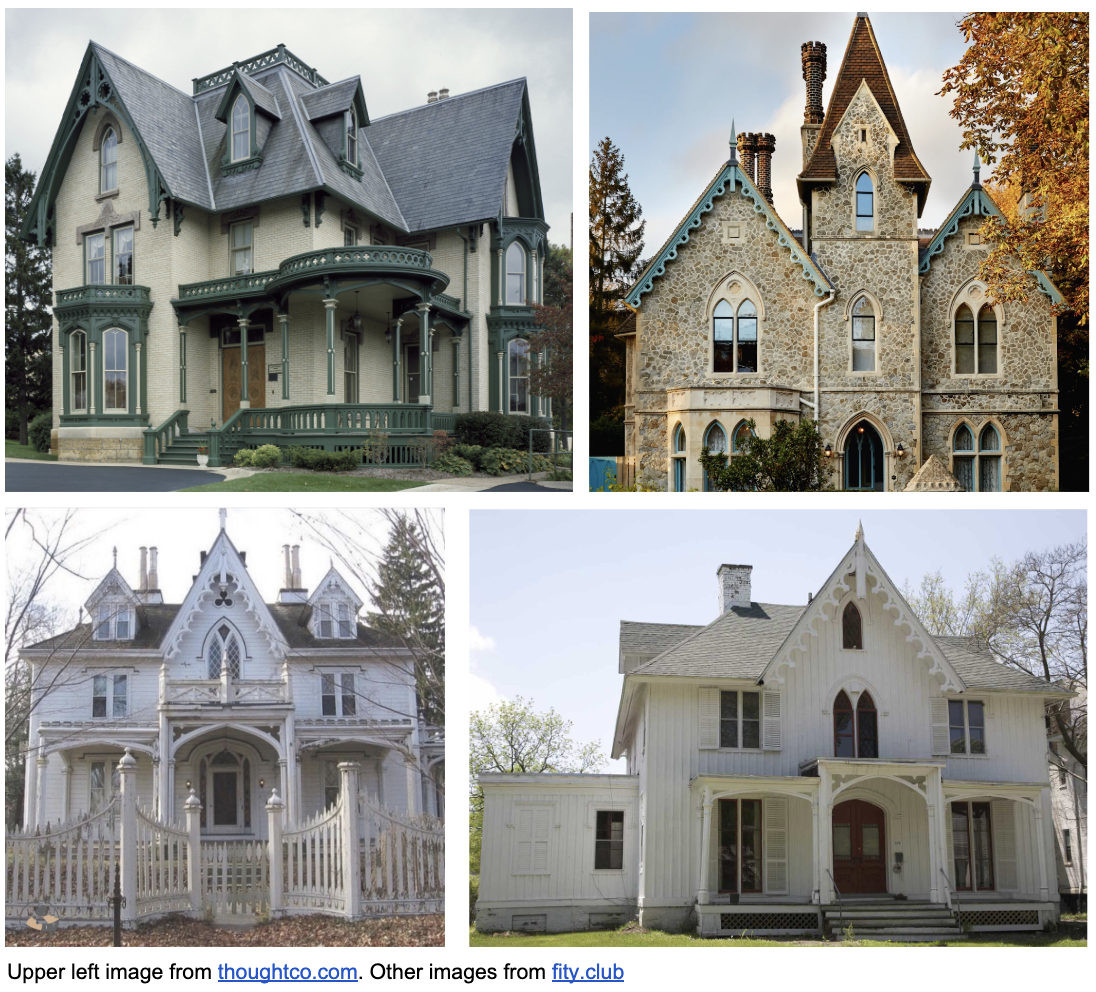
Second Empire Victorian
This Victorian style was inspired by the opulent architecture of France during the reign of Napoleon III (Napoleon Bonaparte's nephew). Tall Mansard roofs on the upper story are the key distinguishing feature of this style.
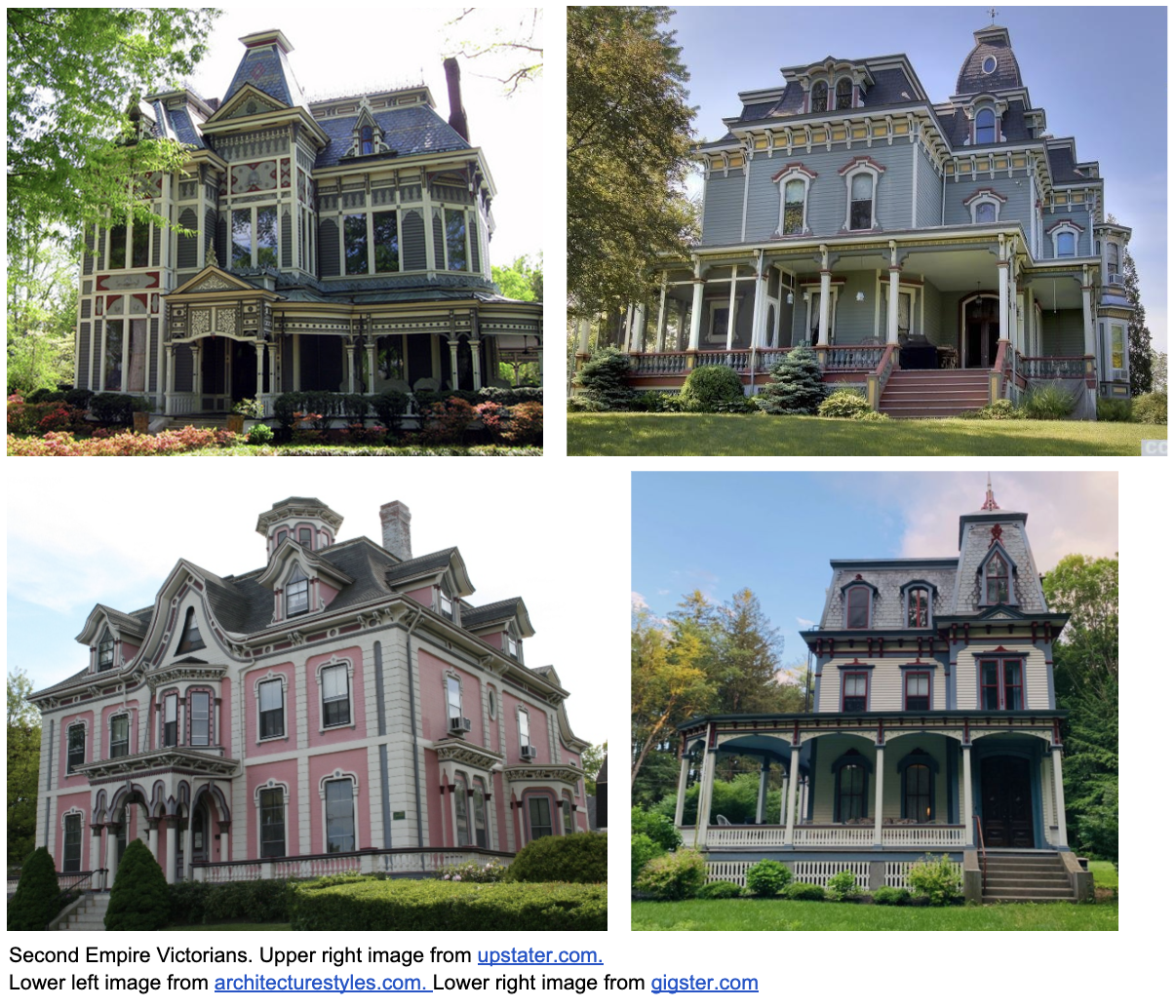
Stick Style Victorian
On first glance, you might confuse Stick houses with the later Tudor Revival Style, because of the half-timbered effect (dark contrasting vertical and horizontal wood elements). However, most Tudor Revival houses are sided with stucco, stone, or brick. Stick Style houses are almost always made with wood and have large, prominent brackets and corbels.
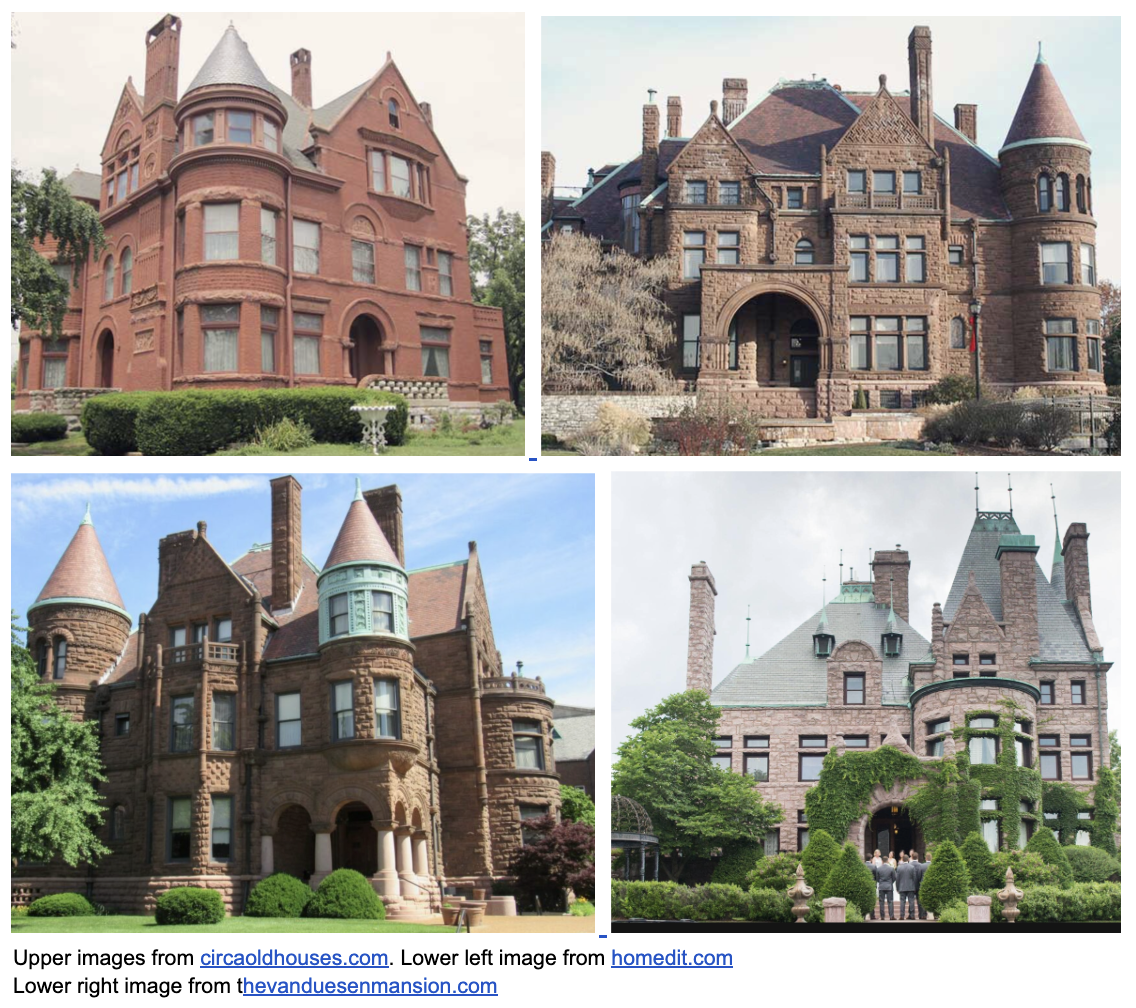
Romanesque Victorian
Like most Victorians, these homes had asymmetrical footprints and a good deal of ornamentation. The key distinguishing factor here is a masonry exterior rather than wood, typically of pinkish stone or reddish brick. Roman arches (half-round tops) and turrets (round towers with cone roofs) are also typical. The heaviness of the stone exteriors harkens back to the Romanesque architecture of Europe in the 11th and 12th centuries.
Queen Anne Victorian
The Queen Anne style of Victorian home is the quintessential embodiment of Victorian styling: elaborate, highly embellished, and opulent. Common features include:
Complex, irregular, asymmetrical footprint
A front-facing gable on the upper story, with ornamental spindles and brackets
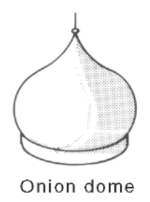
Turrets (round towers) often with onion-shaped domed roofs
Decorative brackets or corbels under the eaves

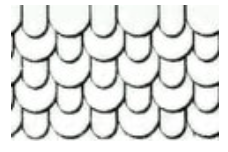
Decorative fish scale siding, often on the upper level
Wrap around porches with decorative railings
Bay windows
Several different paint colors, often pastels
A lot of ornamental trim details and embellishments, often called gingerbread

In city centers where Queen Anne Victorians were built, particularly in San Francisco, they were built on narrow lots abutting one another. These are known as Painted Ladies.

Shingle Victorian
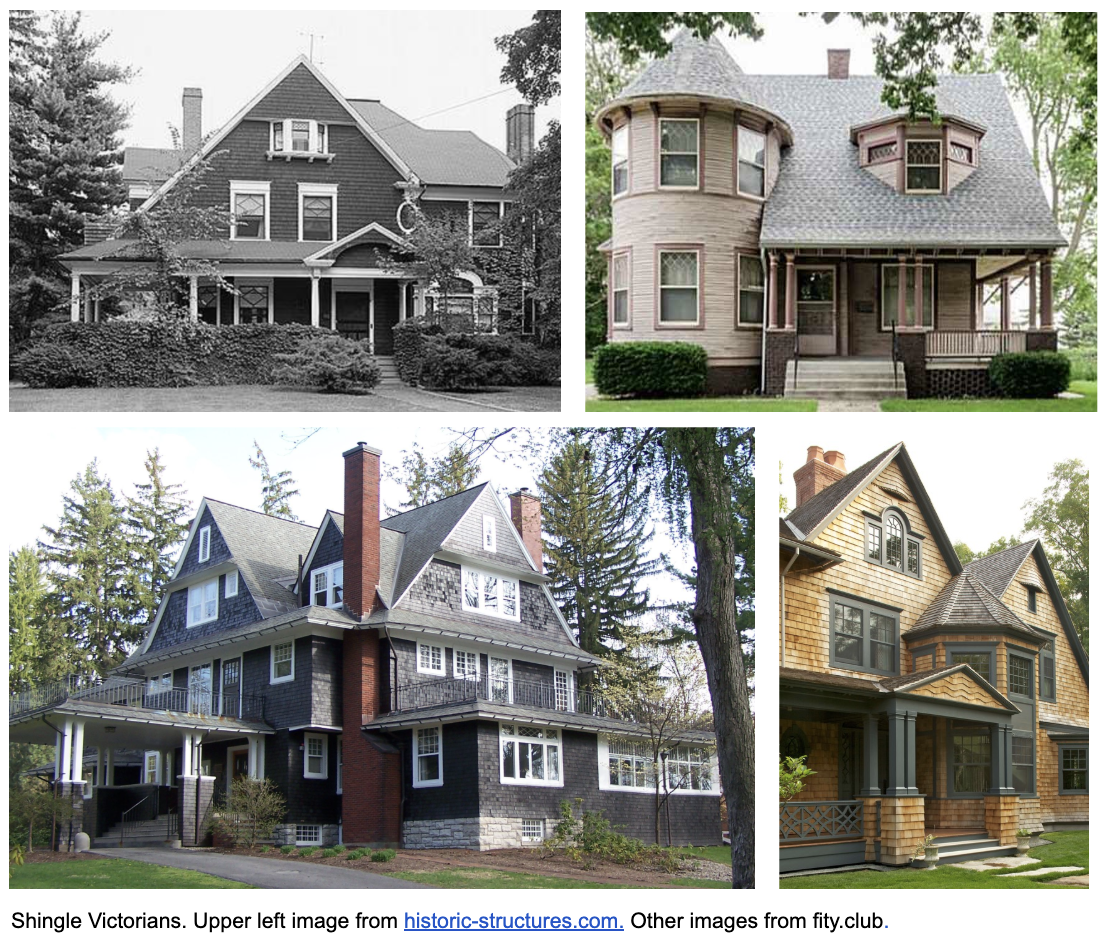
The Shingle style Victorian had the same complex, asymmetrical footprint as other Victorians, but the exterior was much more simplistic. Instead of fussy decoration and embellishment, these homes were uniformly clad in stained wood shingles, which gave them a much more understated look. This style was used primarily along the New England coastline of Massachusetts, Connecticut, Rhode Island, and Long Island, and is also known as the Seaside style.
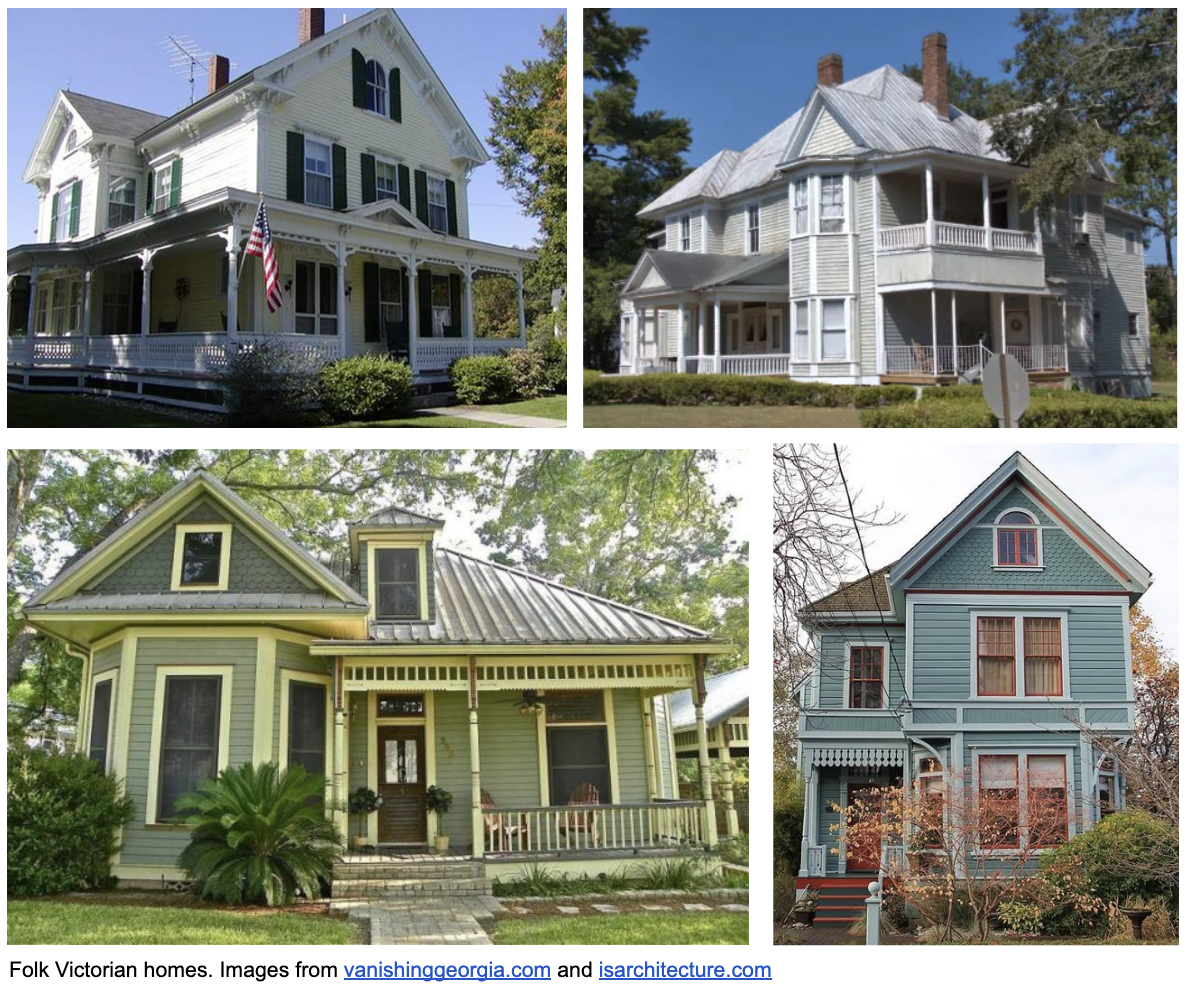
Folk Victorian
Victorian homes were costly to build. The footprint was irregular and complicated. Extensive embellishments were added. Homeowners of modest means across the country who wished for a Victorian-style home built a simpler version, which has come to be known as a Folk Victorian.
Folk Victorians were typically rectilinear in footprint, which was cheaper to build, but still were asymmetrical. And the detailing was fairly simple. But these homes still had some of the characteristics of more elaborate Victorians, such as front porches with decorative railings, corbels under the roof eaves, and bay windows.
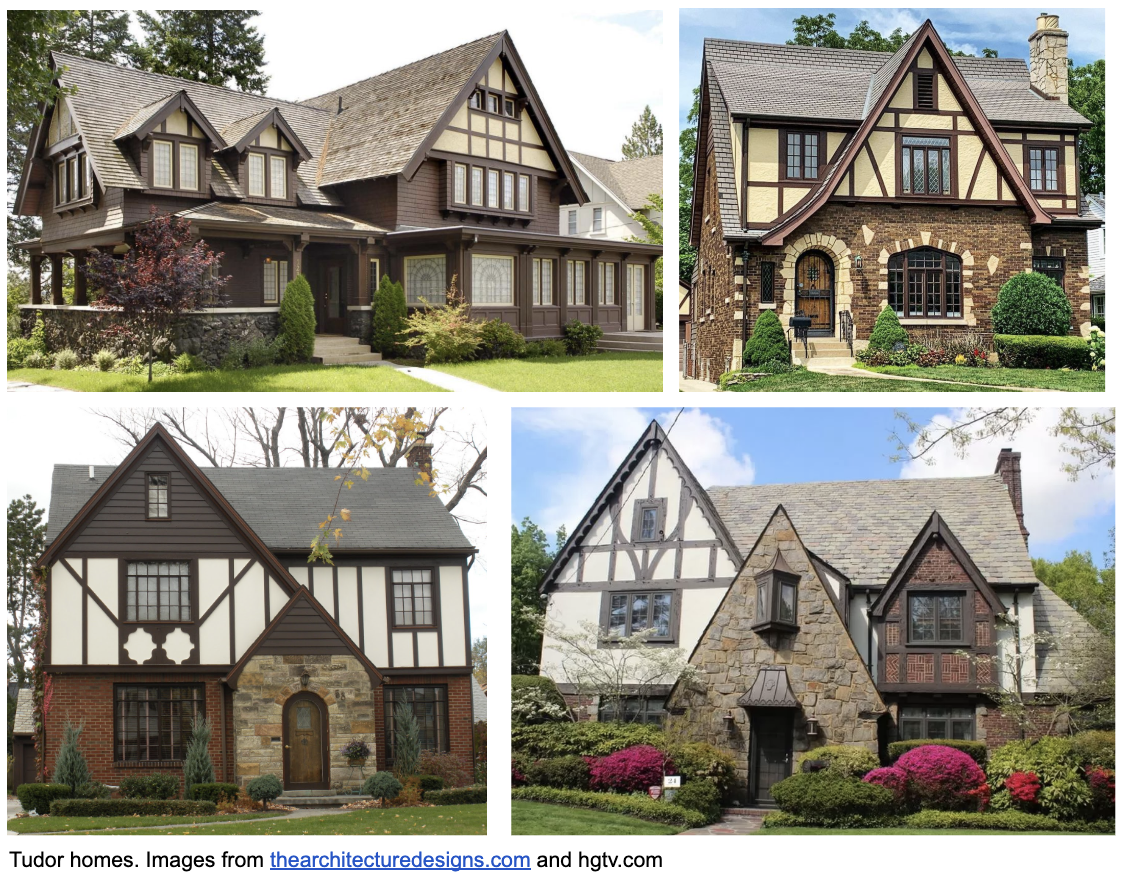
Tudor Revival
Tudor Revival homes were built in the late 19th and early 20th century to resemble Tudor buildings from the reign of King Henry VIII in England (early 16th century). While during King Henry’s lifetime, building construction used half-timbers for structural support, in the later revival period, the half-timber look was purely decorative. If a home includes dark brown wooden horizontal and vertical elements, combined with cream or light stucco, it is known as a Tudor style. Brick or stone may also be included on the exterior facade. Tudors often include steep, front-facing gables.
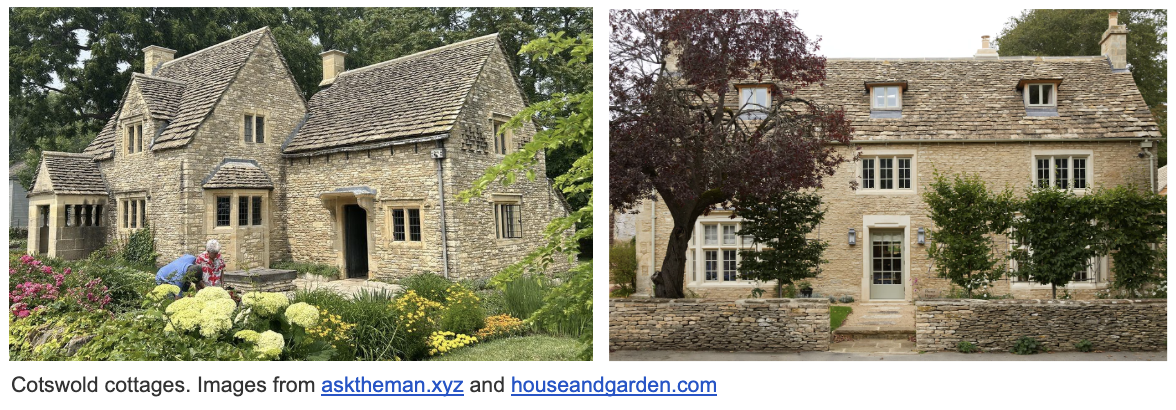
Cotswold Cottage
A Cotswold home is another style that embodies the look of long-ago England. These quaint homes are meant to look like something you would find in the picturesque English countryside. They may have roofing that imitates thatched material, large chimneys, tall sloping roofs, and small windows and doors. Exterior material is typically stone. The overall effect is that of a cozy storybook house.
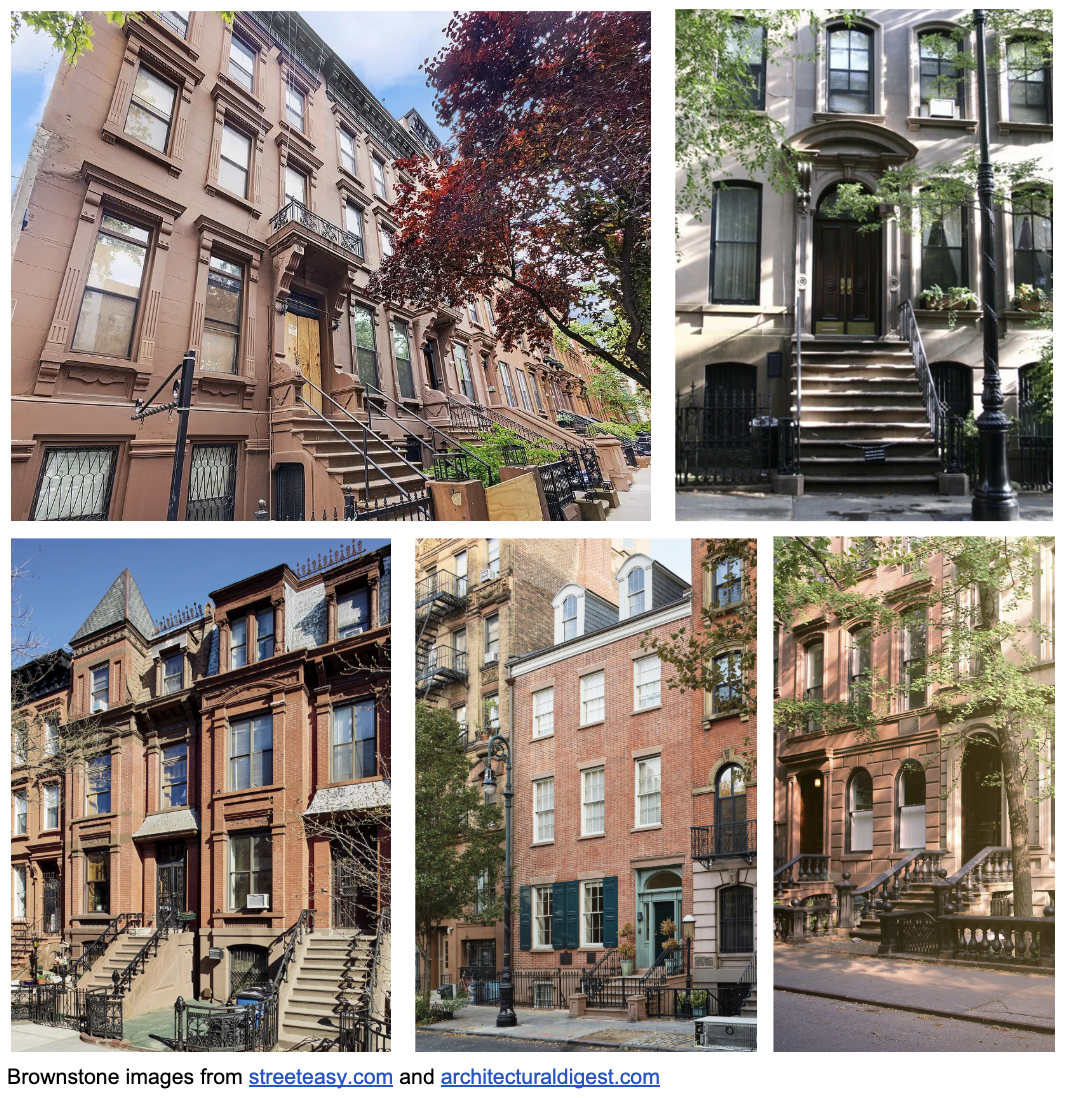
Brownstones
Brownstone homes exist in large cities, such as New York, Philadelphia, Washington DC, or San Francisco, where lot sizes were narrow. They are narrow from side to side but often three or four stories tall. Often, the entry level is elevated many feet above the street level and reached by an exterior stairway. The front facades are clad with brown brick or brown sandstone. They may have tall windows with wrought iron railings.
Side-by-side brownstone buildings are often not separate buildings but rather multi-unit buildings with a shared side wall. Although these homes were originally large and owned by the wealthy, many of these structures have been subdivided into several smaller units.
Italianate
Italianate-style homes were inspired by the villas of Italy—or at least pictures of them, since few American architects of this period traveled abroad. The style is characterized primarily by decorative corbels under very deep roof overhangs, and by the inclusion of a roof cupola centered on the roof structure (though a cupola was not always included). The purpose of a cupola was often to bring additional daylight or fresh air into upper-story rooms.
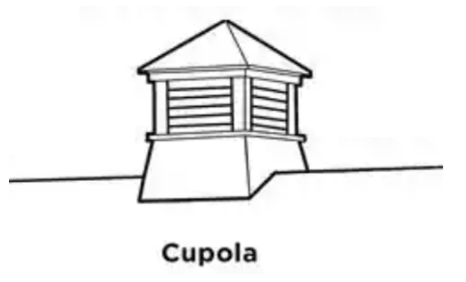
Italianate homes were typically two or three stories in height, with hip roofs. The windows were tall two-over-two double-hung windows, and often had curved or molded window caps.

American Foursquare
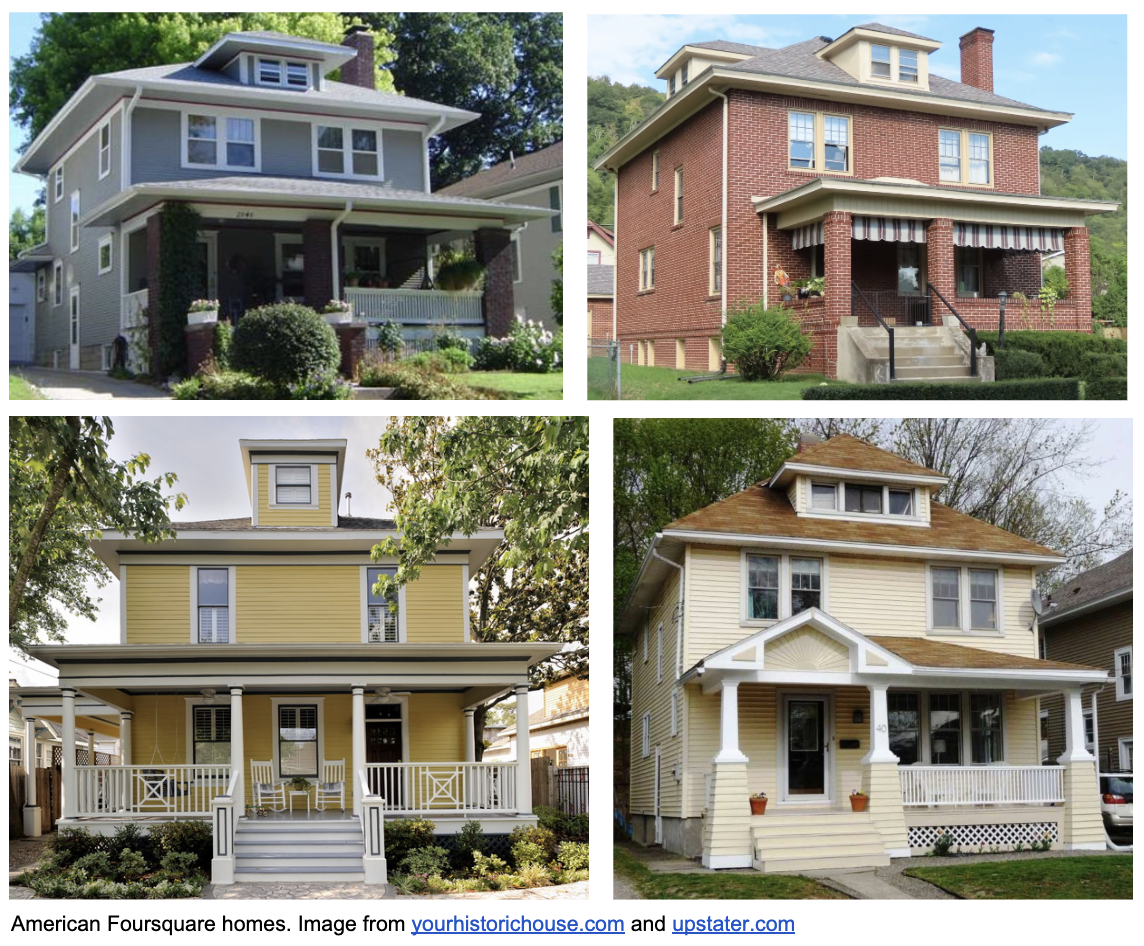
This early-20th-century style is uniquely American and can be found in cities across the country. The footprint was square or slightly rectangular, and there were typically four rooms on both the main and upper levels, thus the name. Its simple shape allowed it to be sold as a mail-order house kit from Sears and other catalog companies, and it was easily constructed on small city lots.
A distinguishing feature was a center dormer window (with a hip roof) on the attic story. There was often a front porch.
American Foursquare houses usually have these features:
Simple box shape with a four-room floor plan
Hip roof
Two-and-a-half stories high (the upper half story includes a large dormer)
Full-width front porch with wide stairs
Six-over-one double-hung windows
Tidewater
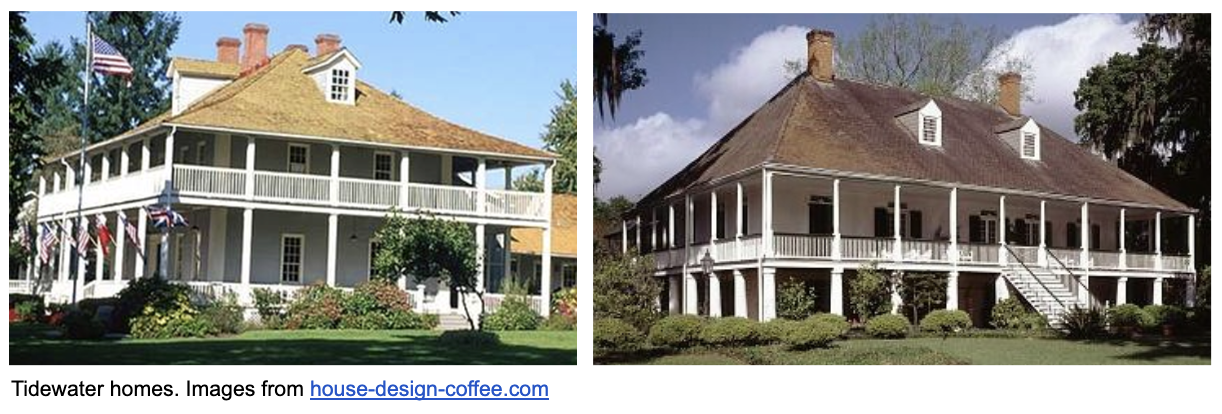
Tidewater-style homes were built primarily in coastal communities in the southeastern United States and in the Mississippi Valley. The roof is typically the unusual bonnet type, or hipped, and there is a covered wraparound porch that often surrounds all four sides. These homes are usually two stories, and there is often a porch on both levels. Because these areas have very warm climates, the entire porch is completely covered by a broad roof to create shade. The covered porch not only expanded the living area but also prevented direct sunlight from flooding into the interior spaces, keeping the home cooler.
Shotgun Homes
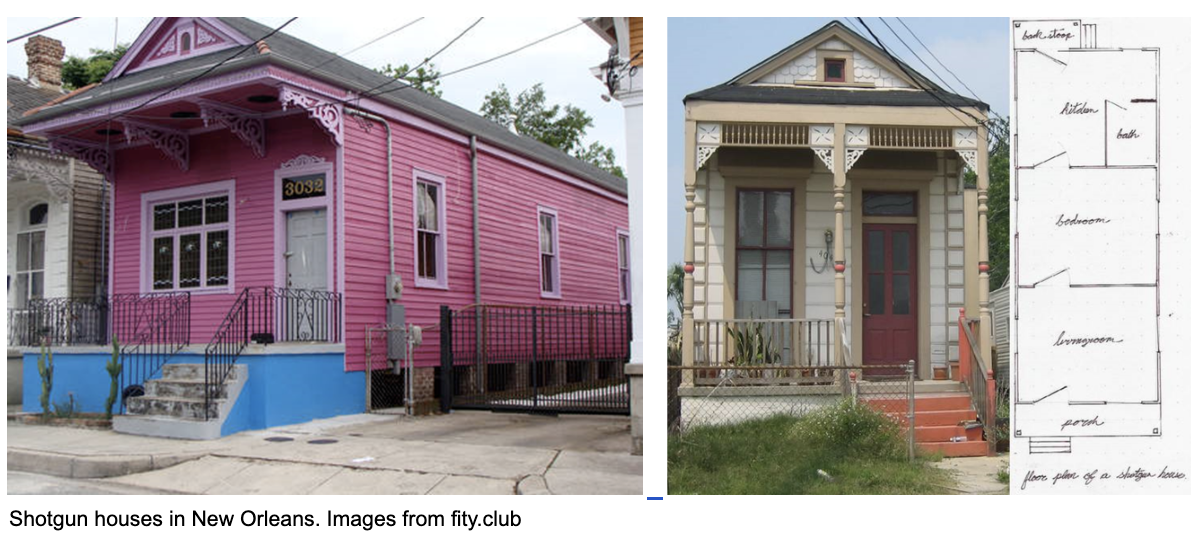
With long, narrow footprints, shotgun houses are designed to fit very narrow city lots. New Orleans, Louisiana, is especially known for its Shotgun houses. The footprint is only one room wide, with rooms stacked front to back. The name comes from the notion that, with all doors opened, you could shoot a gun into the front door, and the bullet would come out clean from the back door.
Arts and Crafts / Craftsman Homes and Bungalows
The Arts and Crafts movement, championed by William Morris in England and Gustav Stickley in the US, was a reaction against the excessive embellishment of the Victorian era and against the factory mass production of furniture and building materials. This style favored handmade furniture and artisan-made materials that were simple and natural.
In the United States, two California brothers, the Greene brothers, designed homes that embraced these ideals.
Arts and Crafts, or Craftsman, houses share many of these features:
Wood, stone, or stucco siding
Low-pitched roof
Wide eaves with triangular brackets
Exposed roof rafters
Porch with thick square, round, or inverted tapered columns
Stone porch supports
Exterior chimney made with stone
Some windows with stained or leaded glass
Built-in cabinets, shelves, and seating

A smaller, more affordable version of this style was known as the Bungalow. Bungalows are very prevalent in California, where the Greene brothers initiated this style. Bungalows share the features of Craftsman homes, but on a more modest scale. Front-facing gables and front porches with thick, inverted tapered columns are the defining features. Stone is often used as exterior ornamentation.

Prairie Style
The Prairie style was developed by famed American architect Frank Lloyd Wright. Learn more about him here. We often think of great architects as producing monumental commercial and public buildings, but Wright is best known for designing residences, many of which were quite modest in size. When he began his career, he did not care for the Victorian-style homes that were in favor, which he felt were over-embellished, boxed-in, and confining. He set out to create a style that was distinctly American.
Wright was a lover of nature and believed that any building should blend with its surroundings. He lived in Wisconsin for much of his life, so he set out to emulate the midwestern prairies in his house designs. His homes were typically one story, with hip roofs with deep overhangs. He emphasized a horizontal line that echoed the surrounding horizon. Inside, rooms were open to one another, and maximized views to the outdoors.
Prairie-style houses usually have these features:
Strong horizontal lines
Low-pitched hip roof
Deep, overhanging eaves
Central chimney
Open floor plan
Clerestory windows
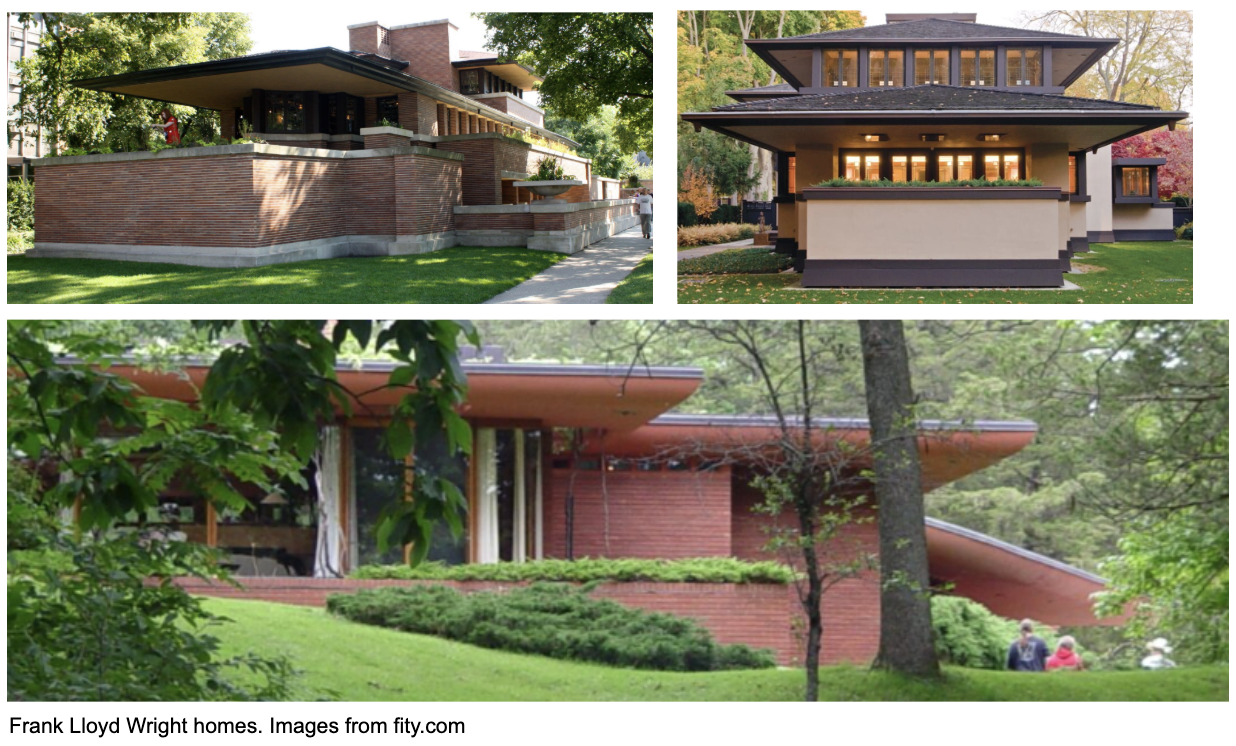
Homes built today that duplicate these features would appropriately be called Prairie Style:

Ranch Style
In the years following World War II, there was a boom in both family sizes and new home construction (the Baby Boom years were 1946 - 1964). Young families needed affordable homes to accommodate their growing families. This was the start of the suburbs, as homes were built outside of city centers.
The Ranch-style home fit the bill. Inspired by both Wright’s earth-hugging Prairie Style houses and the informal Bungalow styles, these homes included these features:
Single story with simple, rectangular footprints
Low-pitched gable roof, or sometimes hip
Deep-set eaves
Lack decorative detailing, except perhaps decorative shutters
Garages or carports, either attached or detached, were sometimes included
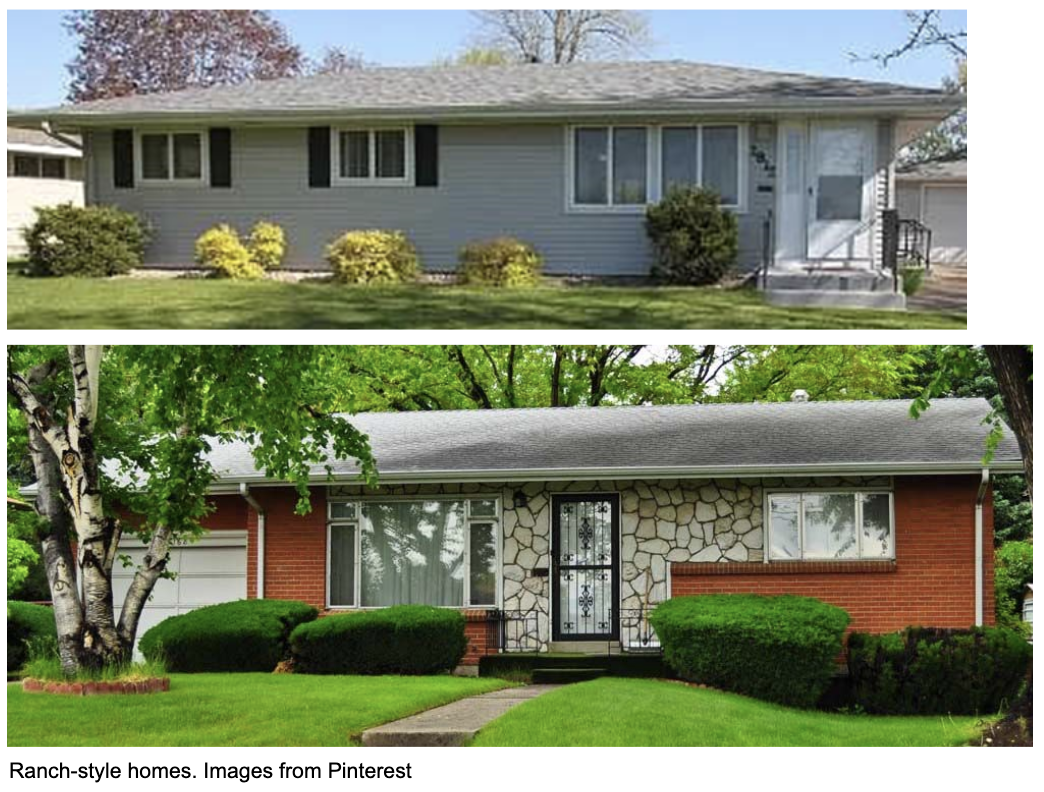
Mid-Century Homes
Homeowners with greater means could afford homes with a few more aesthetic features: larger windows, a more interesting roofline, and a more complex footprint. During the mid-century period (middle of the 20th century, 1940 - 1970), and particularly in California, architects produced some very memorable homes in an altogether new style.
Joseph Eichler was an innovative architect and real estate developer in California at the time, and is credited with advancing this new style of home design. Common features included:
Clean, straight lines
Floor-to-ceiling windows
Angled rooflines
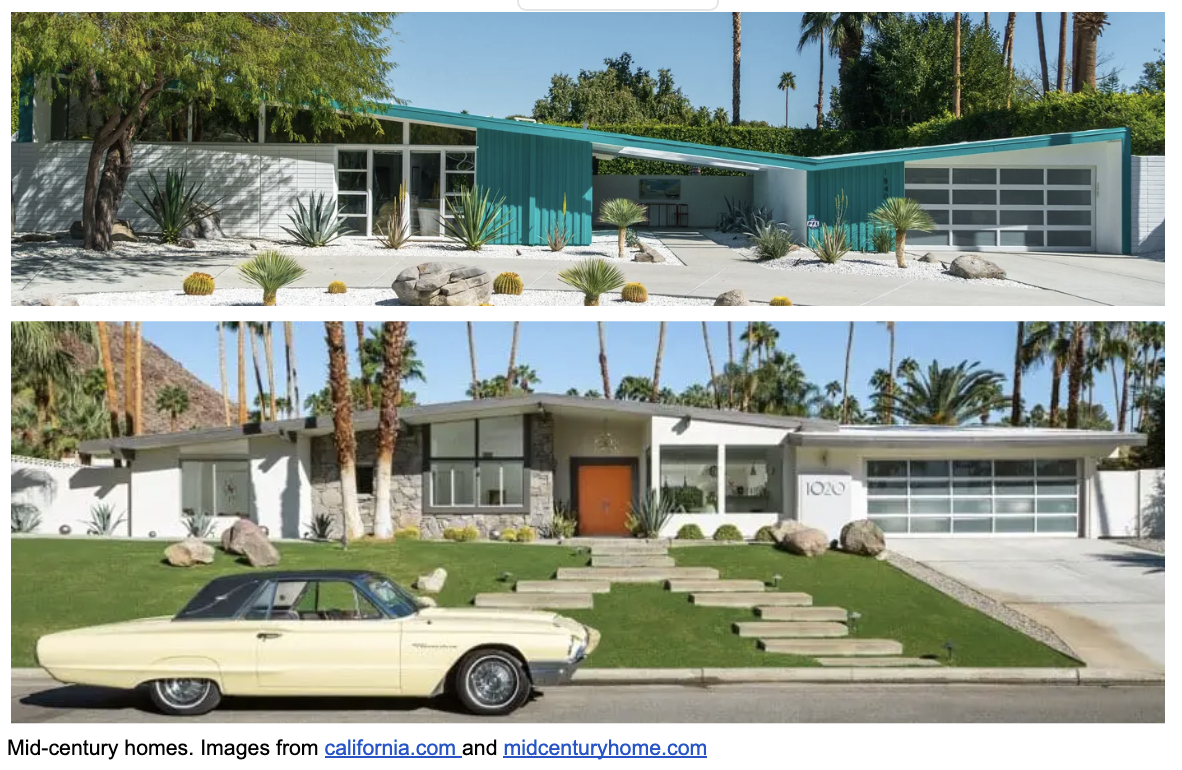
Split-level (and Split-Entry) Homes
In the 1970s and 1980s, home builders sought to innovate on the simple, basic Ranch-style home. So, along came the split-level and split-entry homes of that era. Varying from both a single-level ranch and a traditional two-story, the idea of the split-level is that living areas could be separated from private areas by just a few steps, rather than a single long staircase.
The front door opened into a foyer or directly into the main living area. Then, a half-flight stairway led either up or down to other areas of the home. The split-entry home (sometimes called Raised Ranch) is a two-story home with the lower level partially submerged below grade.
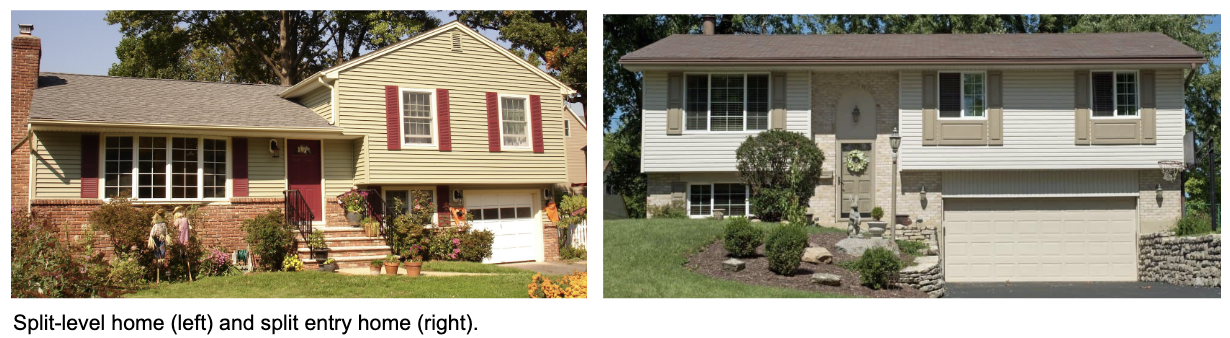
Mission Revival
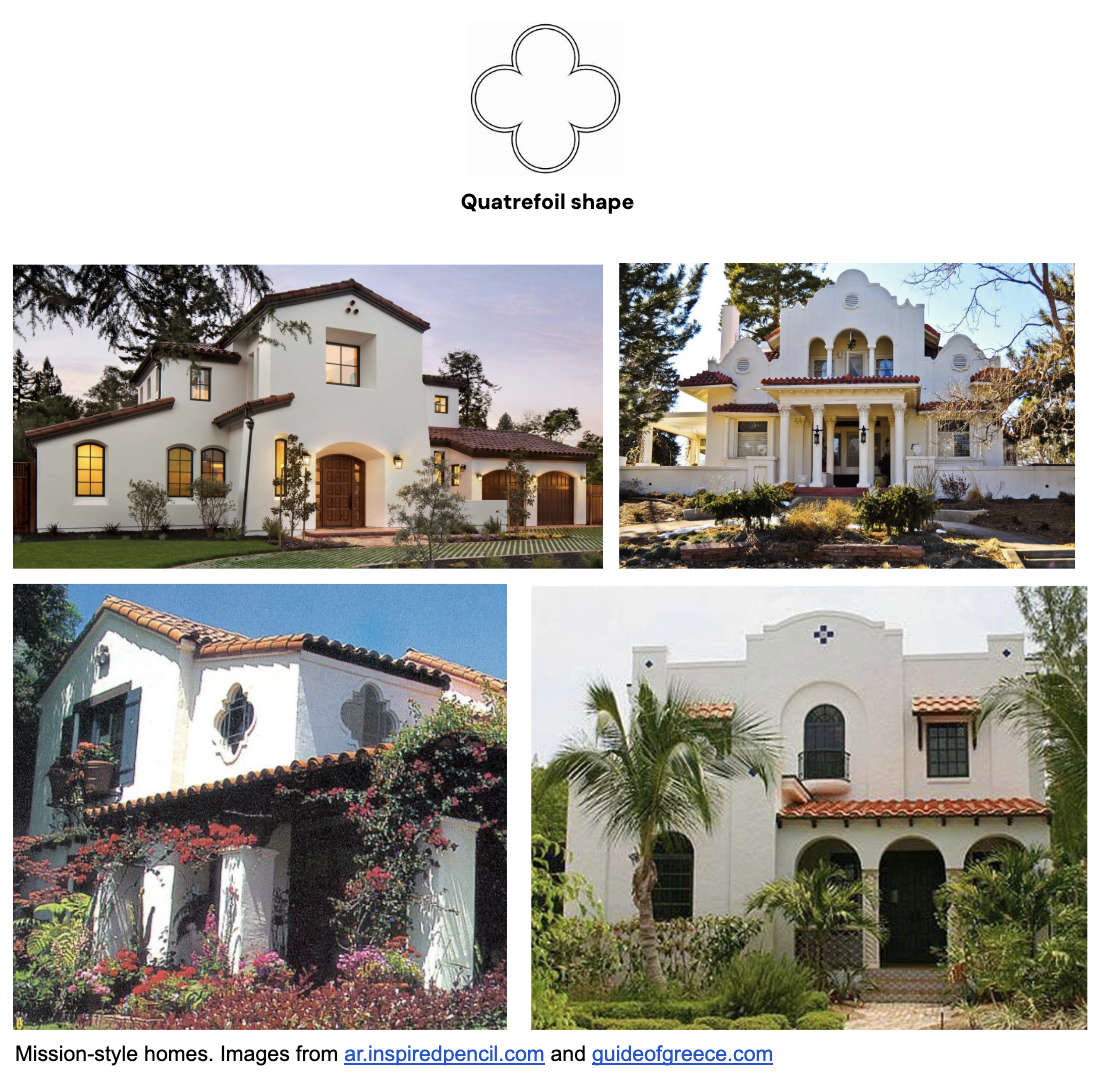
This style of home emulates the historic mission churches built by Spanish colonists who settled in the southern and western areas of the US. Mission Revival-style houses usually have arched dormers and roof parapets. Some resemble old Spanish mission churches with bell towers and elaborate arches. The earliest Mission-style homes were built in California. The style spread eastward, but most Spanish Mission homes are located in the southwestern states. Deeply shaded porches and dark interiors make these homes particularly suited for warmer climates.
Spanish Mission-style houses have many of these features:
Smooth stucco siding
Roof parapets
Large square pillars
Twisted columns
Arcaded entry porch
Red clay roof tiles
Round or quatrefoil window
Mediterranean
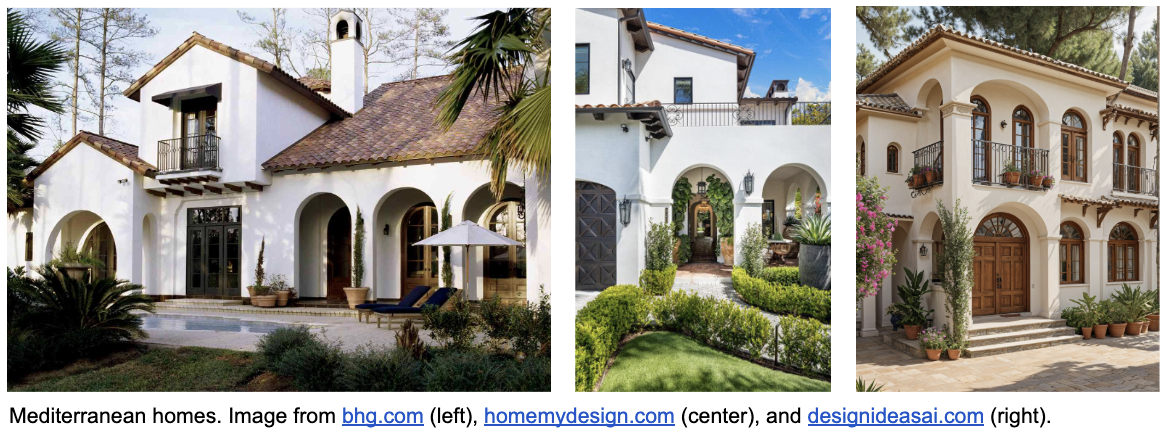
Mediterranean is a wide-reaching style found mostly in the southern and western US. The styling is reminiscent of the architecture of Spain, Italy, and Greece, the countries bordering the Mediterranean Sea. This style of home has been built for decades and remains very popular today.
Mediterranean houses have many of these features:
Low-pitched roof
Red roof tiles
White or light stucco exterior
Arches above doors, windows, or porches
Heavy carved wooden doors
Black, wrought iron railings
Expand Your Knowledge
Challenge yourself to identify the style of the homes you see on your travels, or while simply driving around your neighborhood! Understanding where the detailing originates can help you style the interiors with elements that are aligned with that home’s legacy.
Sources Used:
Abraham, M. (2025, January 27). How to tell the difference between Colonial Revival and Georgian homes. https://centuryhomesamerica.com/how-to-tell-the-difference-between-colonial-revival-and-georgian-homes/
Ireland, J. (2018). History of interior design, 2nd edition. Fairchild Books.

Want The Design Brief® delivered straight to your inbox?
If you liked this email, be sure to sign up for The Design Brief®, our complimentary publication that gives you bite-sized lessons on all the technical interior design topics you didn’t learn (or forgot) from design school—straight from our resident tenured interior design professor!