
©️ Dakota Design Company 2017-2026 | All rights reserved. This content may not be reproduced, distributed, or used without permission.
WRITTEN BY DR. GLORIA for DAKOTA DESIGN COMPANY
Homeowners often agonize over why their rooms are not as pleasing as they would like them to be, like the rooms in magazines and on interior designers’ websites. They have purchased or collected items they like and arranged them into a room setting, but why isn’t the whole thing beautiful?!?!?
If they are able to do so financially, this is hopefully the time they reach out to a professional residential interior designer to engage their services.
The issue of a room—full of owned items that are quite nice—that remains visually dull, is often a lack of select points of exceptional visual interest.
Yes, every item may have been carefully chosen, or not. But if the compilation of those items still appears as a hodgepodge, the issue is a lack of emphasis and focal points.
Establishing a focal point, or several points of high interest, is the difference between a room that feels like a curated experience and one that just feels like a collection of furnishings.
Most interior designers understand how to use emphasis and focal points to create visual interest. If you’ve already mastered this skill, this post may provide vocabulary to help you articulate to clients why these 'anchors' (select points of exceptional visual interest) are essential. If you’re looking to sharpen your skills at creating impact and emphasis, read on.
What is Emphasis and Focal Points?
A focal point in a room is an emphasized element, or a collection of emphasized elements that:
adds overall visual interest to the sum of the parts
attracts attention and encourages the viewer to look closer
adds character to a space because one or more elements are real standouts
How are Focal Points and Emphasis Created?
There are several strategies that can create areas of emphasis—focal points—in a space:
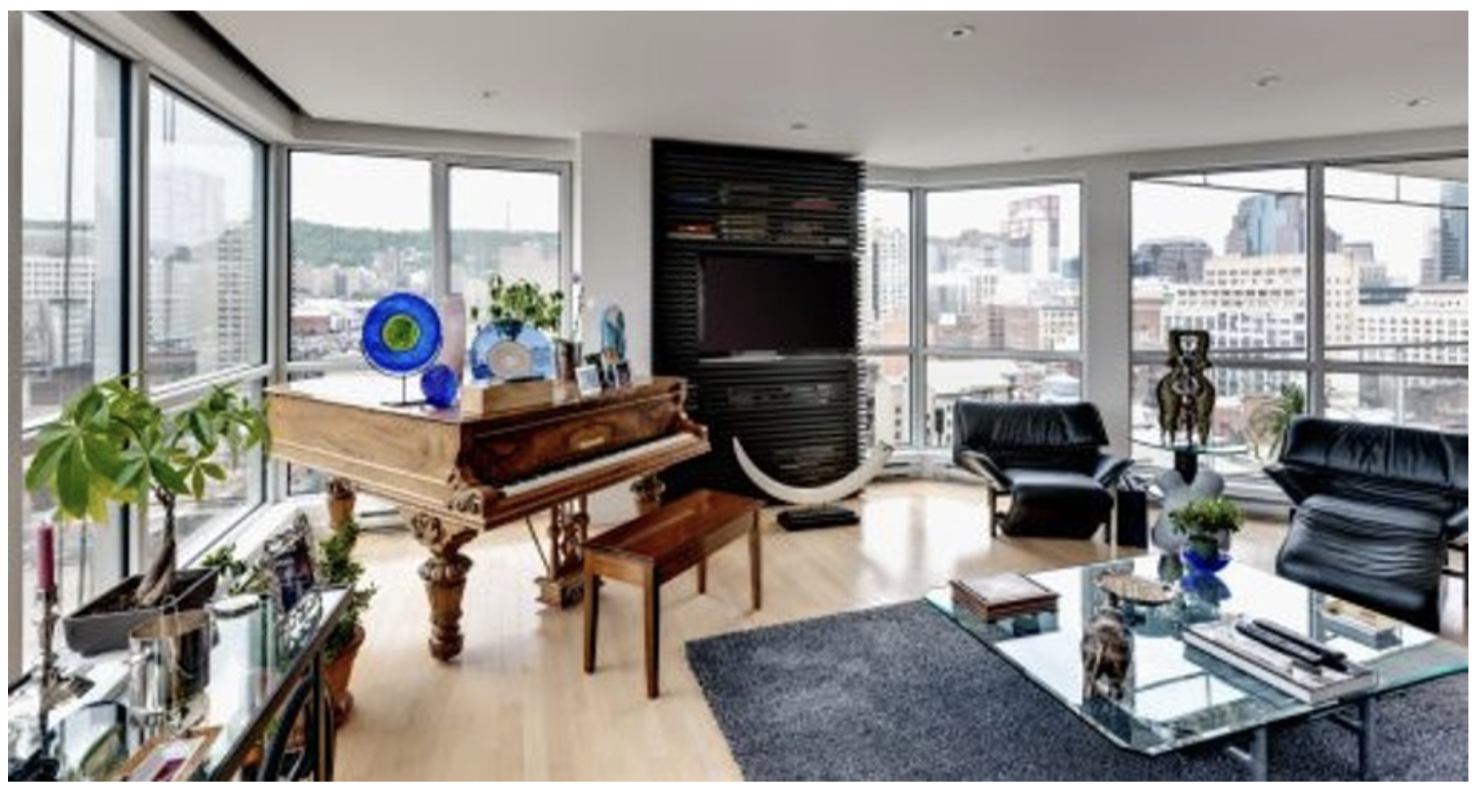
By using contrast - Remember the Sesame Street song, 'One of these things is not like the others'? That is the essence of contrast. By utilizing an element that differs significantly from the other pieces in the space, emphasis of that element will naturally be created.
In the contemporary room below with sleek materials and clean lines, the walnut grand piano with traditional, hefty turned legs becomes an immediate focal point simply because it breaks the established visual pattern.
By using isolation or specific placement within a space - in this room, the pendant fixture over the end table commands attention simply because its placement is unexpected; as the only ceiling-hung element, its physical isolation makes it a singular point of interest.
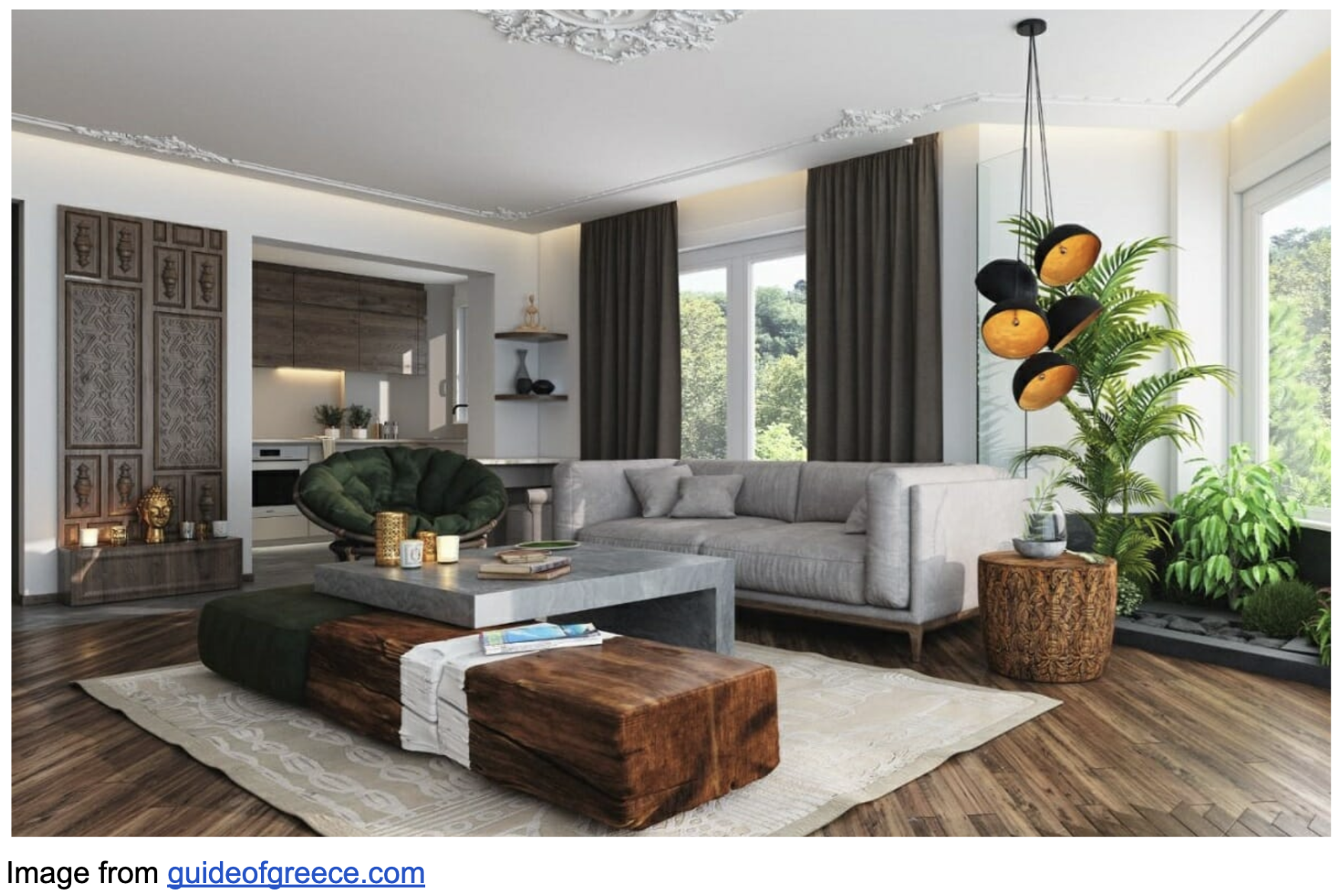
By using color - Using a contrasting or highly saturated color creates an immediate shift in a room's hierarchy. Because the human eye is naturally drawn to the most intense hue in its field of vision, a saturated accent—whether on a single architectural wall or a strategic piece of upholstery—carries more visual impact than the surrounding elements.

By using light - Positioning a light source in a way that a higher level of light intensity hits the item that wants to be emphasized is a fool-proof way to create a focal point. Retailers understand this well and will use lighting to direct shoppers towards specific items. An item being hit with a high level of light appears particularly enticing.
In this Apple store, it is easy to see why shoppers are drawn toward the display phones that are basked in bright light.

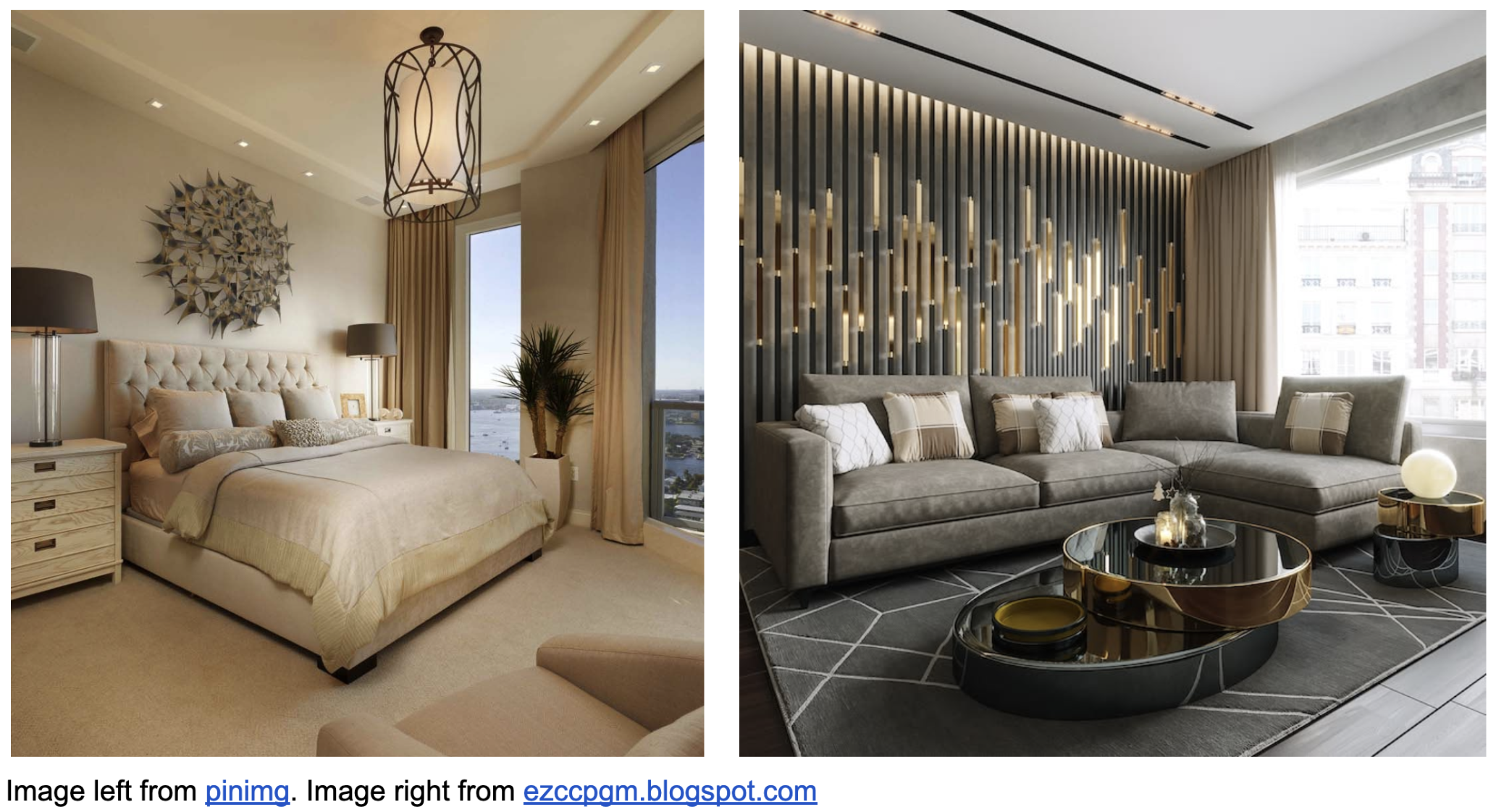
By using scale - visual impact is often found in the extremes of scale—either the exaggerated size of a single item, or the juxtaposition of differently proportioned items can create strong visual interest. Read more about scale and proportion here.
In a bedroom, the bed will always be a point of interest by the very nature of its large size, relative to other pieces in a bedroom. In the room below left, other large-scale items provide additional focal points: the wall art piece over the bed, the large ceiling light fixture, and the large windows.
In the image at right, the large-scale wall art piece behind the sofa demands attention both due to its large scale and its interesting texture.
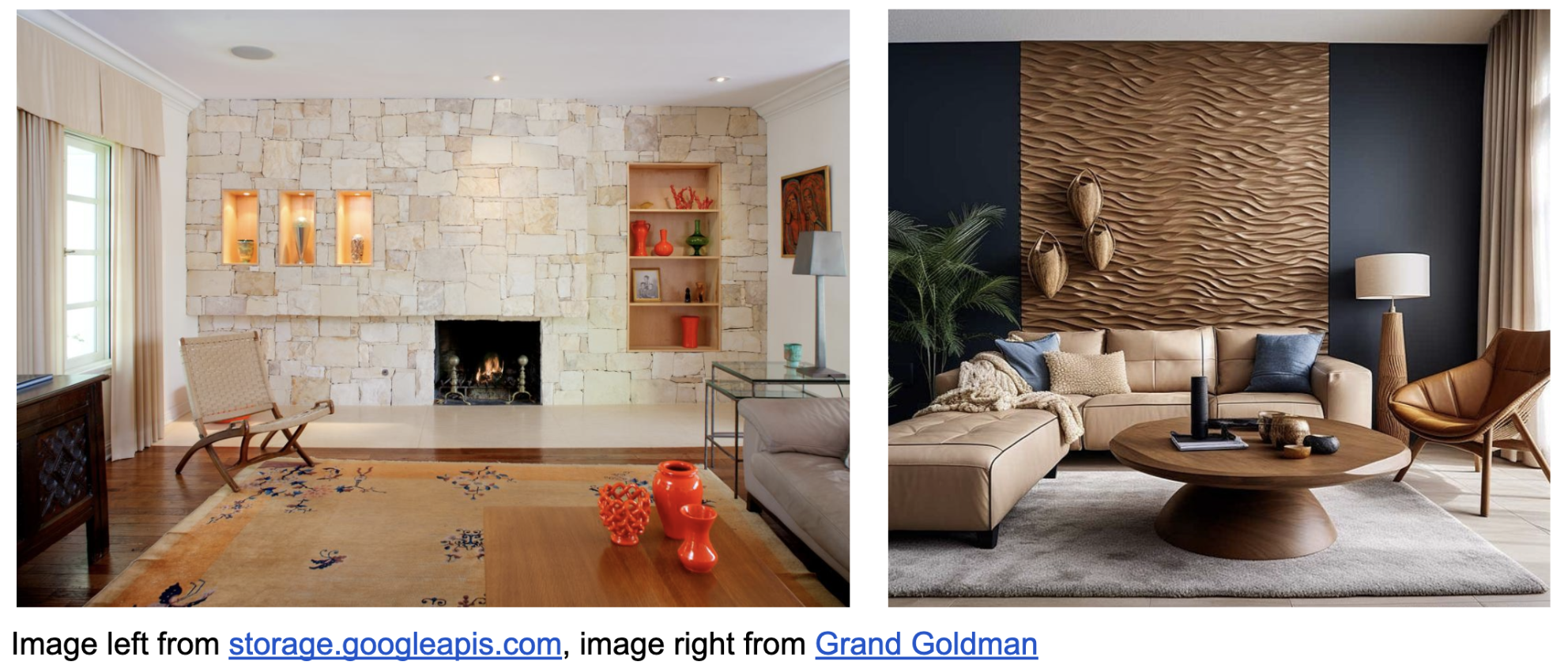
By using strong textures - texture is the surface quality of an object or material, how something feels to the touch (tactile texture) or how it is perceived to feel by the eye (visual texture). Materials that have strong tactile or visual textures are very visually interesting, and demand attention. Read this article to learn more about using texture in design.
The stone wall (below left) and the textural wall panel (below right) are points of strong visual interest in these rooms.
Should there Be Only One Focal Point in a Space?
A focal point is a specific point of visual interest, and most well-designed rooms actually contain several. There is no rule stating a space must be limited to just one; in fact, a successful interior typically utilizes a hierarchy of points to keep the eye moving. By intentionally placing multiple focal points, a designer emphasizes the entirety of the space, ensuring the 'whole' is much more impactful than the sum of its individual parts.
While a room can host multiple focal points, they usually function best in a hierarchy. A primary focal point—like a stunning fireplace—acts as the 'anchor,' while secondary points of interest—like a curated bookshelf or a unique lamp—provide layers of discovery as the eye moves through the space.
By creating a series of focal points, an interior designer guides the eye on a journey around the room. This keeps the focus on the entire composition, rather than just a single part of a space.
What Happens When Emphasis and Focal Points are Not Executed Well?
There are two diametrically opposed problems that can occur:
When nothing is emphasized—in other words, there is a lack of focal points—the whole of the parts will lack visual interest. Without a primary anchor to organize the surrounding elements, the arrangement can feel aimless and not unified.
On the other end of the spectrum, too many focal points, or ambiguous focal points may cause a lack of unity and poor composition. If everything in a space is shouting for attention, the result isn't vibrant—it's exhausting.
Let’s look at an example of each issue.
Problem #1: The Lack of Emphasis -
The room below includes many interesting elements—a stunning fireplace, a very nice sectional sofa, beautiful floor-length draperies, and a mid-century inspired leather chair and ottoman. But overall, the room lacks visual interest. It feels flat. The reason? Nothing is emphasized.
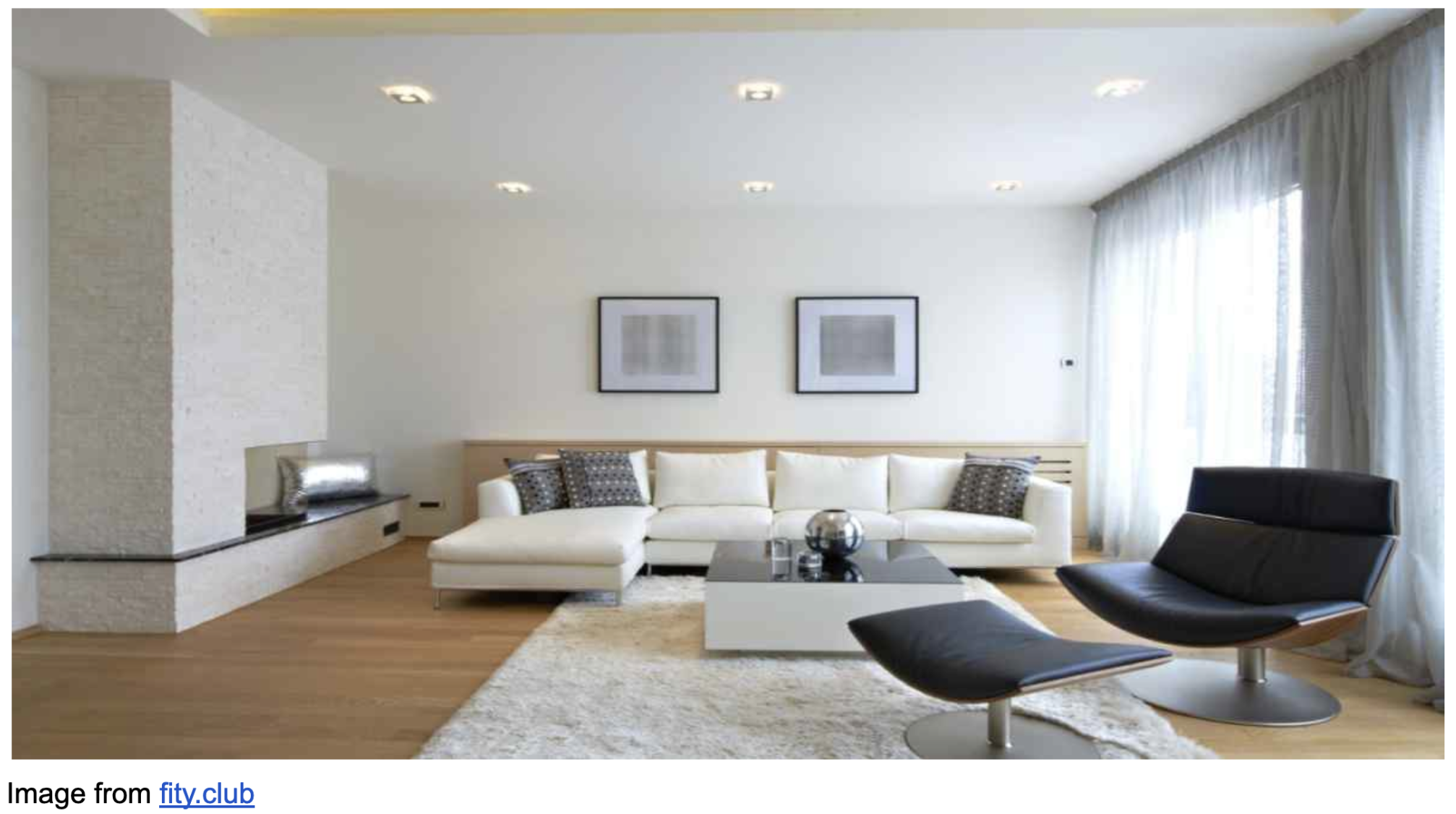
The fireplace could easily be a focal point in the space, if it were emphasized in one of several ways:
A piece of artwork, that was large in scale, colorful, or textured, was hung on the fireplace wall
The furniture was rearranged so that the sectional, and chair and ottoman faced the fireplace
A directional ceiling light was aimed at the fireplace so that it received a higher intensity of light than the overall ambient lighting in the room
The sofa could be a focal point, and area of interest if:
The throw pillows were bright and varied
The wall behind the sofa was painted in a contrasting color, or included interesting wallcovering or paneling
The artwork above the sofa could be a focal point if:
It was larger in scale, and more colorful
The rug and coffee table could be a focal point if:
The rug was either patterned, textural, or colorful
The rug was wider, better grounding the furniture
There were some larger-scale, colorful, or textural decorative accessories on the coffee table
Problem #2: Emphasis Overload -
Without any clear focal points or areas of emphasis, a room can feel aimless, cluttered, or visually "loud." The room below has many interesting pieces, some of them quite striking. But, there are too many things of visual interest that demand attention. There are no focal points, no specific elements to demand more visual attention than anything else in the room. There needs to be a visual hierarchy, with certain elements highlighted above others in the space.
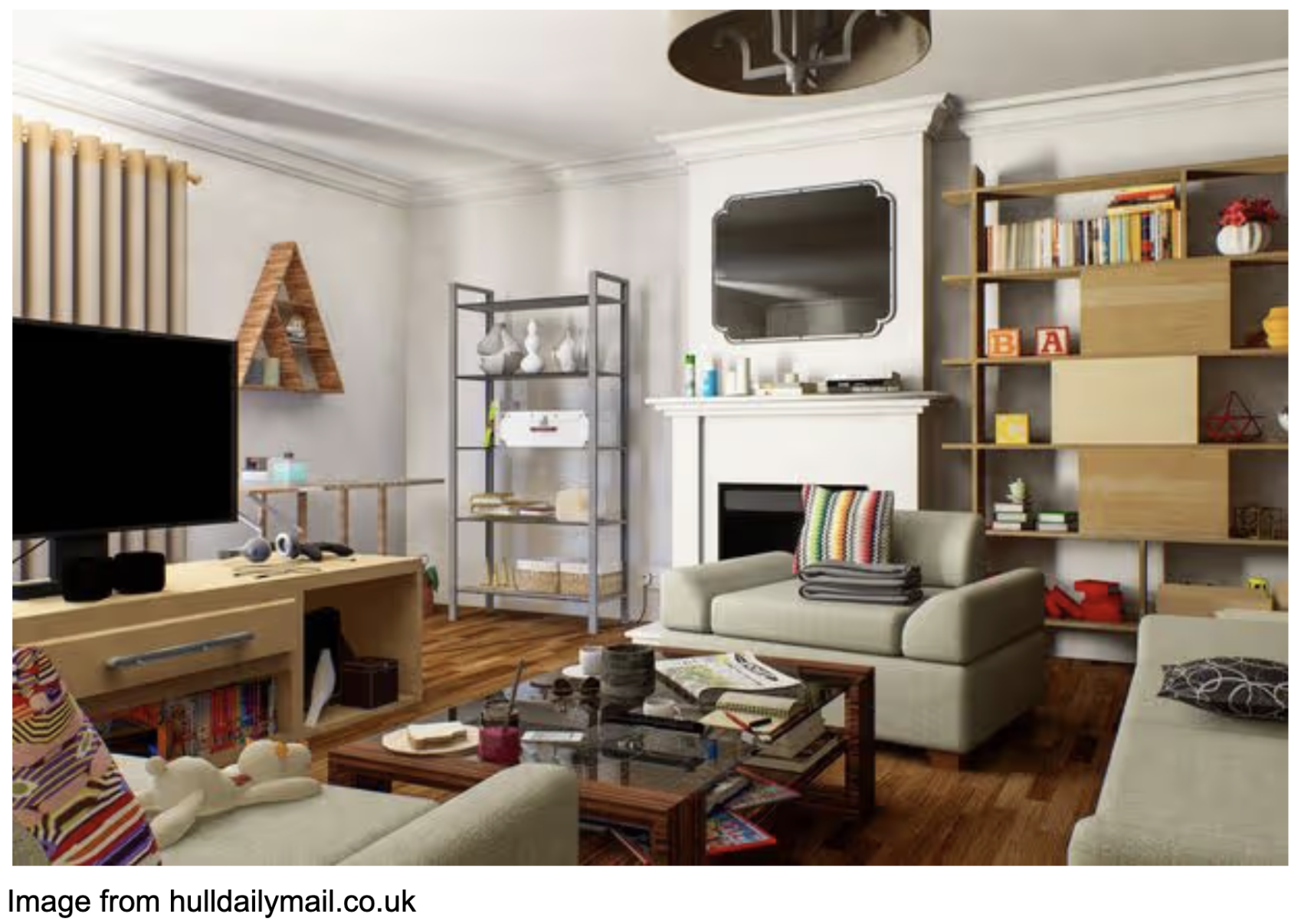
Refining this space is ultimately an exercise in composition and visual artistry. There are opportunities for focal points, but none are appropriately emphasized.
Replacing the mirror with a vibrant, large-scale wall art piece would more effectively anchor the fireplace, establishing it as the room's undeniable focal point. Currently, the mismatched bookcases and haphazardly placed accessories create visual 'static' rather than intentional interest. Adding a well-proportioned rug to ground the seating arrangement and curating a more thoughtful collection of accessories on the mantel and coffee table would create much more visual interest and cohesion.
In Summary
Establishing a focal point is the difference between a room that feels like a curated experience and one that just feels like a collection of furniture. Some basic rules-of-thumb for creating select points of exceptional visual interest include:
Incorporate statement furniture pieces that differ in style or color from the rest.
Use bold or saturated colors in specific areas, such as an accent wall, throw pillows, or artwork.
Utilize lighting to highlight the focal point, creating areas of greater visual intensity.
Add artwork or decor that contrasts in size or shape with surrounding elements.
Use contrasting textures, like rough surfaces paired with sleek furniture.
I often compare the elements of design—line, shape, pattern, texture, and color—to the ingredients in a recipe. While those components are essential, using emphasis to highlight specific elements is like adding a savory seasoning that ultimately defines the character and taste of the entire room. By giving greater importance to select elements, we move beyond a simple list of ingredients and create a space with a distinct, intentional flavor.
Sources used:
Lauer, D. A., Pentak, S. (2012) Design Basics 9th ed., Cengage Learning
Additional Resources

Want The Design Brief® delivered straight to your inbox?
If you liked this article, be sure to sign up for The Design Brief®, our complimentary publication that gives you bite-sized lessons on all the technical interior design topics you didn’t learn (or forgot) from design school—straight from our resident tenured interior design professor!