The Design Brief® | Design Principles: Aesthetic Geometry - Harnessing Scale and Proportion for Maximum Effect

©️ Dakota Design Company 2017-2026 | All rights reserved. This content may not be reproduced, distributed, or used without permission.
WRITTEN BY DR. GLORIA for DAKOTA DESIGN COMPANY
Here we will explore the very important concepts of scale and proportion in design. Together, they are one of the key design principles. Other posts have covered the design elements of Line, Shape and Form, Pattern and Texture, Light, and Color.
And, we have explored the design principles of Rhythm, and Balance in previous posts.
I always like to say that the design elements are like the ingredients used in a recipe. But the design principles are the means of combining those ingredients artfully and skillfully to arrive at a highly pleasing aesthetic.
Why are SCALE and PROPORTION important?
Scale and proportion is a design principle that homeowners often have difficulty getting correct. How many times have we gone into homes that have small pieces of wall art hung above a sizable sofa? Or, the end table is really petite and looks ill-proportioned?
The homeowner was likely at a store, found a piece they liked, and bought it without considering the scale and proportion relative to their room or their other pieces. The price was right (probably because it was fairly small-scale!), so they made the purchase. They don’t have the luxury of an AutoCAD wall elevation to check the proportion of a wall art piece relative to the furnishings that will be against that wall, or the ability to draw out how a 5’ x 8’ rug would look on their living room floor plan relative to existing furnishings. So, it's no wonder they get it wrong a lot. Getting scale and proportion right takes some consideration.
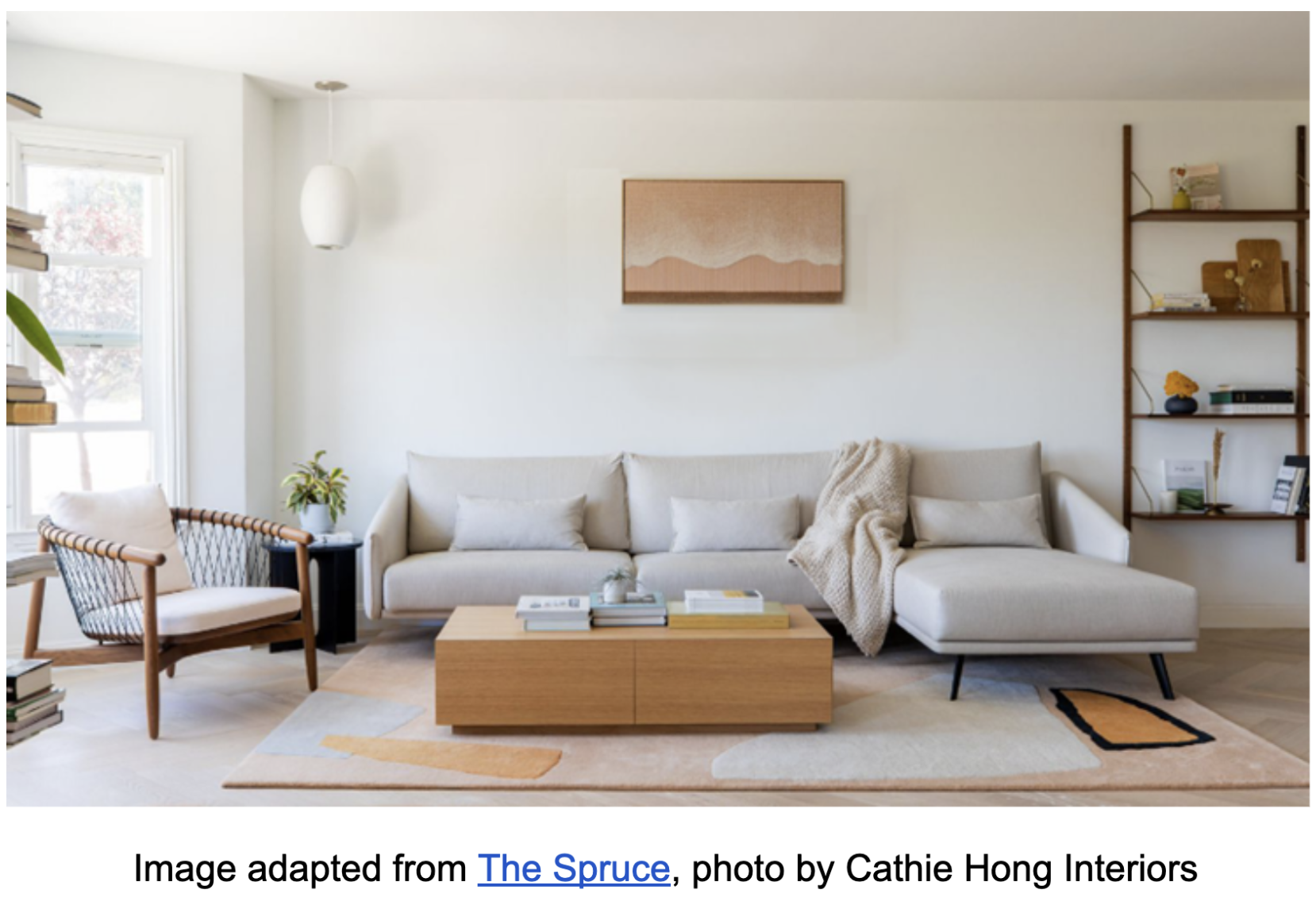
And why do they always hang the too-small art so high???????
PRO TIP: For proper proportion of artwork with the furniture underneath it, the artwork or art grouping should be about a minimum of half to two-thirds the width of the furniture piece. Below, the art, at less than half the width of the furniture below it, results in a proportion that is too small.

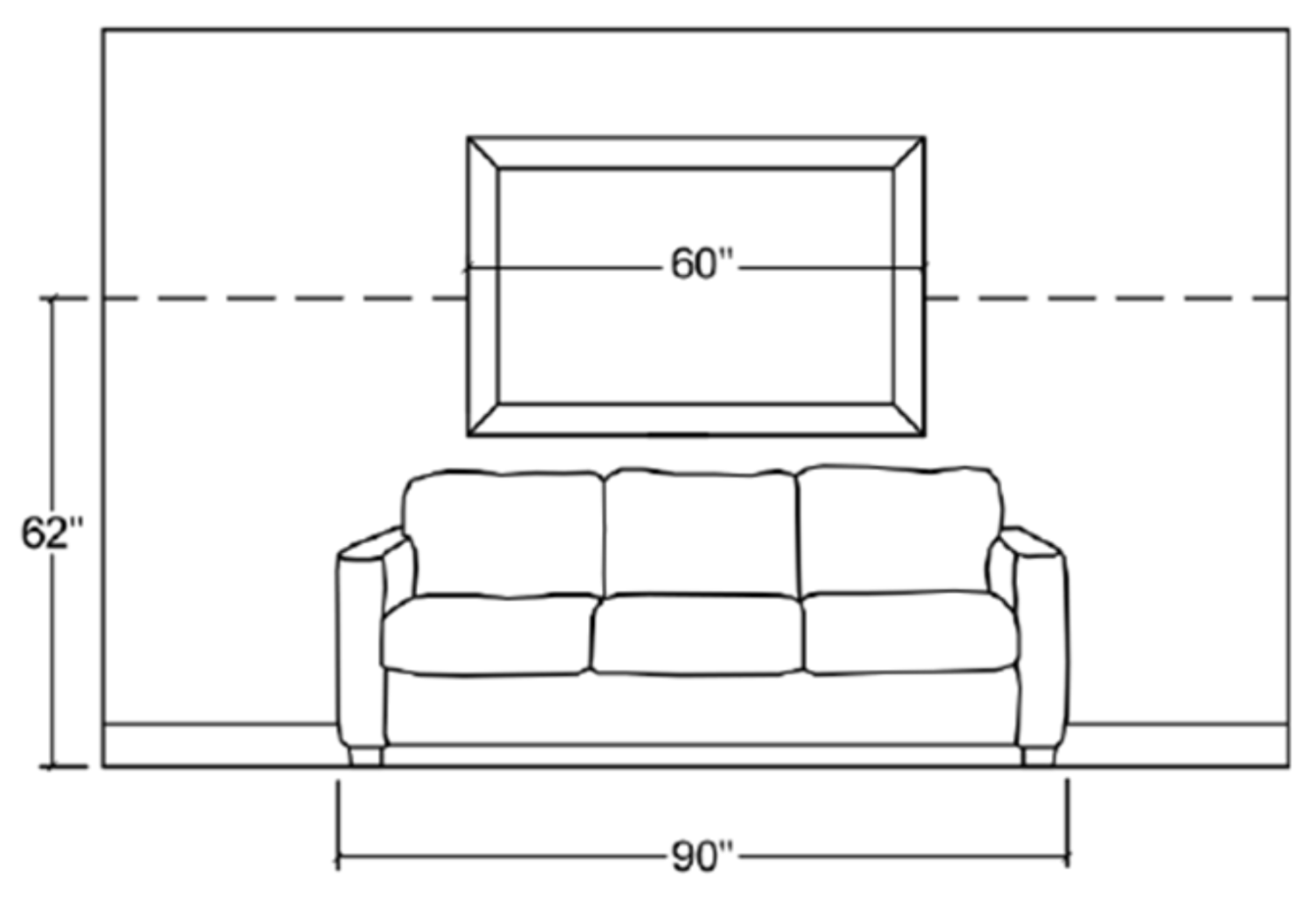
Shown below, the proportion is much better, with the art piece exceeding half of the width of the furniture piece below it. Also, the vertical height of wall art should be hung so it is centered at approximate eye height, which is about 62” to 66,” considering both men and women. A higher level could be appropriate for taller-than-average clients, or where ceiling heights are higher than typical.
Want reliable real-world measurements for furniture layouts, cabinetry, clearances, circulation, and more? Check out our Size & Standards Guide, written by Dr. Gloria.

Everything you need to confidently plan residential spaces using essential sizes and standards.
A comprehensive field guide for interior designers who want reliable, real-world measurements for furniture layouts, cabinetry, clearances, and circulation, without spending hours in Google every day.
This 60+ page guide brings together essential residential interior design sizes and standards so you can create functional, well-proportioned layouts that work in real homes, not just on paper.
What’s inside:
Room-by-room standards for furniture sizing, cabinetry dimensions, and space planning
Clearance requirements and layout guidelines for common residential spaces
Key building code considerations related to stairs, circulation, and usability
Human-centered design insights to support comfort, safety, and everyday living
Over 80 clear illustrations to make dimensions easy to understand and apply
This guide is ideal for designers who want a dependable reference they can use during design development, space planning, and layout reviews, and it also serves as an excellent training resource for team members who support space planning.
Note: This guide uses the Imperial measurement system (feet and inches). Metric equivalents are not included.
Let’s Break it Down: Scale and Proportion
First, let’s clearly define scale AND proportion. They are not the same.
Scale is essentially another word for size. To describe something as “large scale” means that it is big. To describe something as “small scale” means that it is small. But the scale or an item, whether it be a mouse, a dog, an elephant, or a piece of furniture or artwork, is always judged in relation to other like elements. A very large dog is still small in relation to a horse. But it is worth comparing a small dog to a large one to define their attributes.

Comparing the sizes of varying like, or similar elements involves the principle of proportion.
In the line drawings above, we considered the proportion of wall art pieces to adjacent furniture pieces, and concluded that the width of the first should be half to two-thirds the width of the latter in order for a pleasing proportion to exist.
So, Scale is about SIZE, Proportion is about SIZE RELATIONSHIPS.
In an interior space, proportion is relevant both in regards to the relative size of various items in the room, but also the relative size of items to the size of the room.

Let’s Break it Down: The Golden Rectangle
The ancient Greeks, whose civilization existed from about 800 B.C.E. to 323 B.C.E, really understood proportion and which proportions were most aesthetically pleasing. It is commonly held that a rectangle is more pleasing than a square, and that a rectangle of a certain proportion (height to width) is more pleasing than long, skinny shapes or short, squat rectangular shapes.
It is generally accepted that a rectangle with proportions where the long side is just over one-and-a-half times longer than the short side is one of the most pleasing rectangular proportions that exists. This ideal proportion drives so many things: typical wall art dimensions, sizes of many of the everyday products we purchase, company logos, and graphic design layouts. Interestingly, many proportions found in nature also mimic this ideal proportion.
The GOLDEN RATIO (also known as DIVINE PROPORTION) was discovered and used by the Greeks as the most pleasing proportion of a rectangular shape.
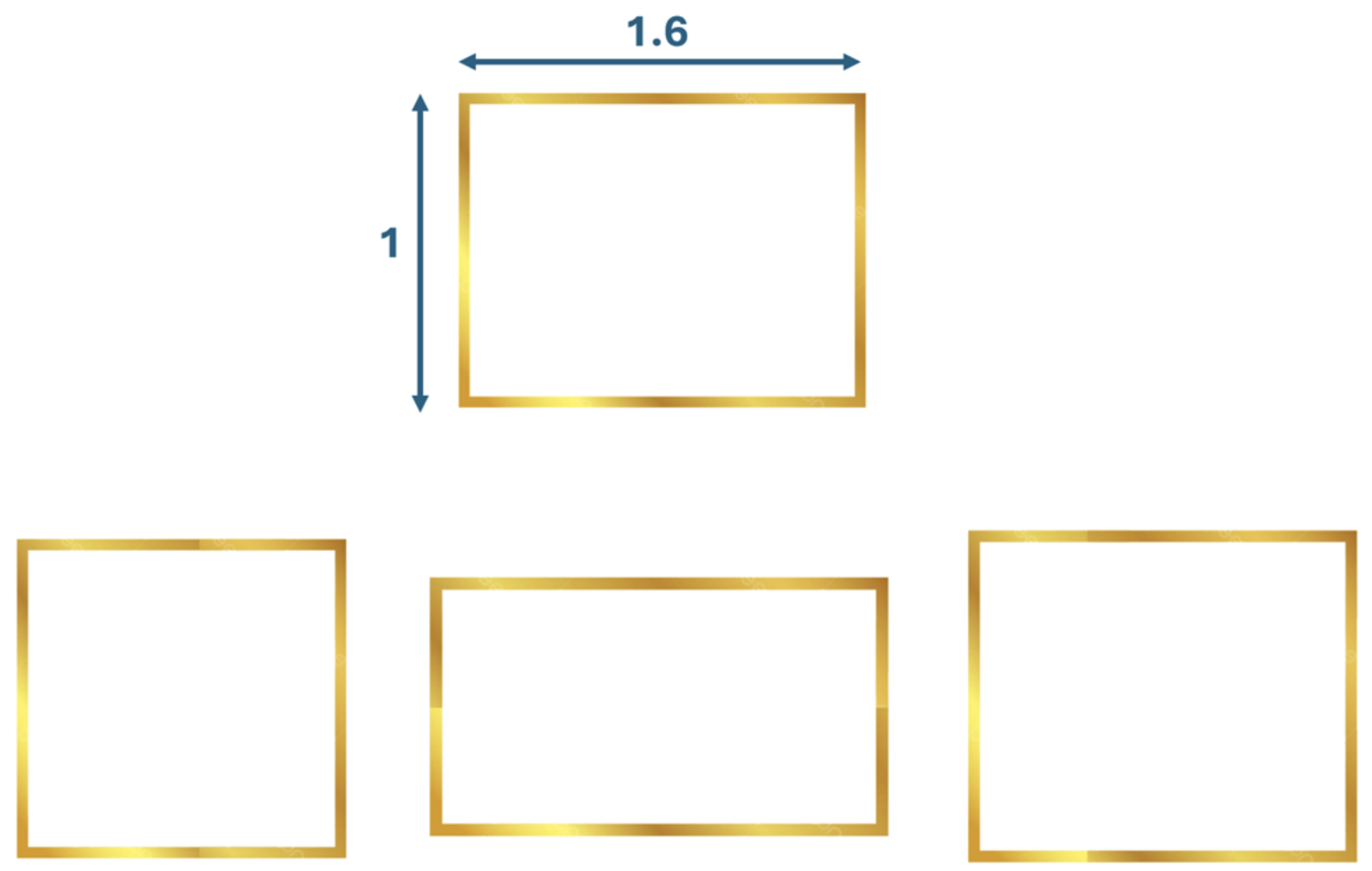
The rectangle at the top, with a ratio of about 1 to 1.6, is generally accepted as being more pleasing than the other square and rectangular proportions shown below it. The actual golden proportion is 1 to1.618, which follows many interesting numeric sequences found in mathematics. And, when the ancient Greeks built the Parthenon in Athens, a temple to the goddess Athena, they utilized this proportion, 1:1.618 in many aspects of the building’s proportional relationships.

Designers and artists do not always map out specific proportions to align with prescribed reference points. I find that achieving appropriate proportions in furnishing layouts, artwork placement, and other aesthetic choices depends on a good eye and a keen sense. But, I personally do rely heavily on AutoCAD line drawings to help determine appropriate sizes of elements, such as with the study drawings below, to determine the best rug or wall art size.

Do Pleasing Proportions Equate to Beauty? You Bet They Do!!!
Certain proportional relationships are so pleasing to us that they affect our emotions. Consider that the facial proportions of a baby and a puppy—very large eye-to-head proportions, very large head-to-body ratio—can make us absolutely giddy!

And, our societal ideals of beauty are strongly tied to proportional relationships as well. The youthful face, with its large eyes and lips, and a taut face are often (and unfortunately) perceived as more pleasing than an older face, where eyes and lips have thinned and facial skin has slackened, resulting in smaller eye- and lip-to-face proportions.

In architecture and interior spaces, pleasing proportions are often achieved through the careful placement of furniture and the use of "negative space," which allows the eye to rest. For example, a high-ceilinged room might use tall windows or vertical accents to emphasize its scale, while a minimalist living area might use low-profile furniture to maintain a clean, unobstructed horizon line. These general concepts guide the relationship between height, width, and depth, ensuring that a space feels intentional and grounded rather than overwhelming, or, at the other end of the spectrum, uninteresting and dull.
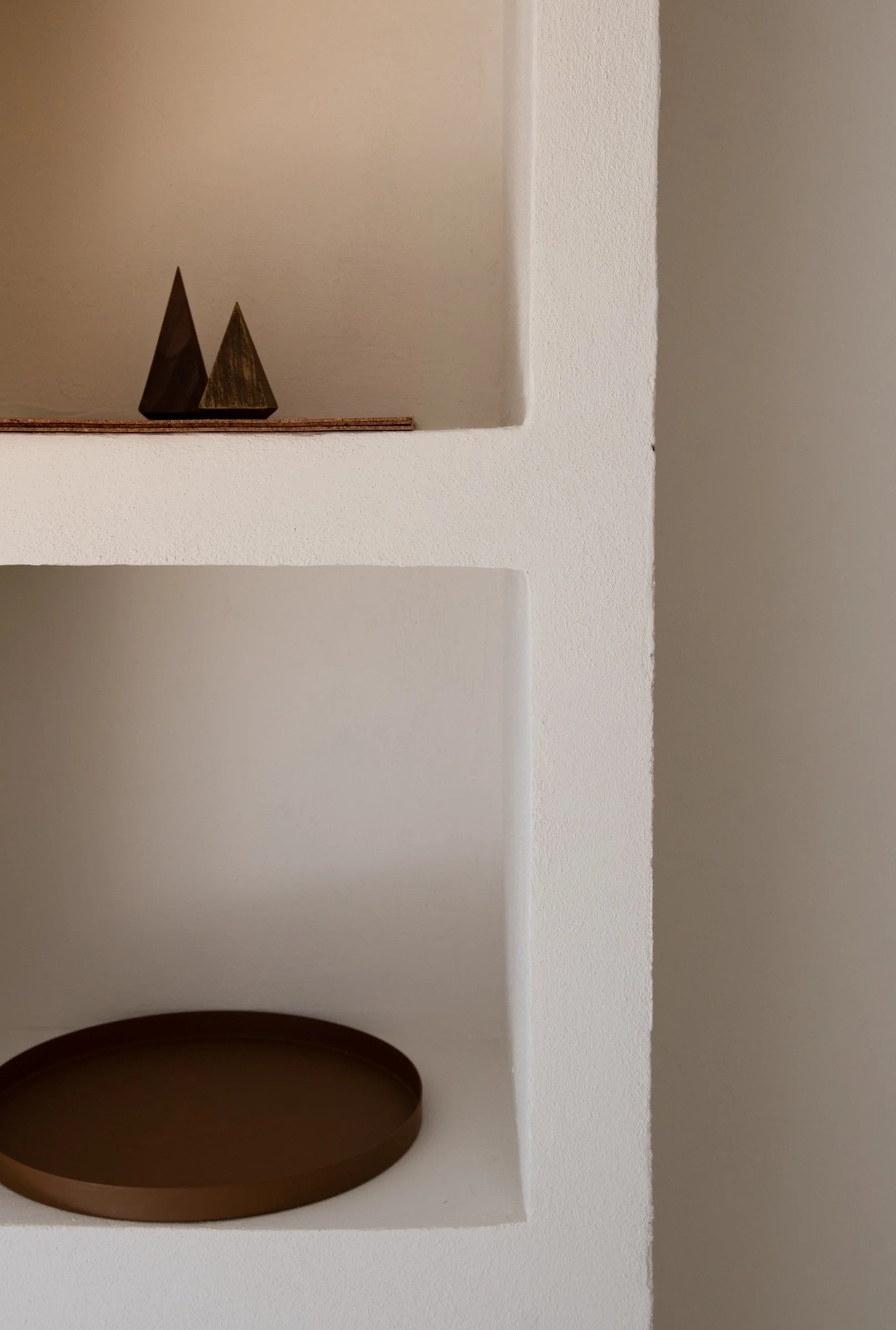
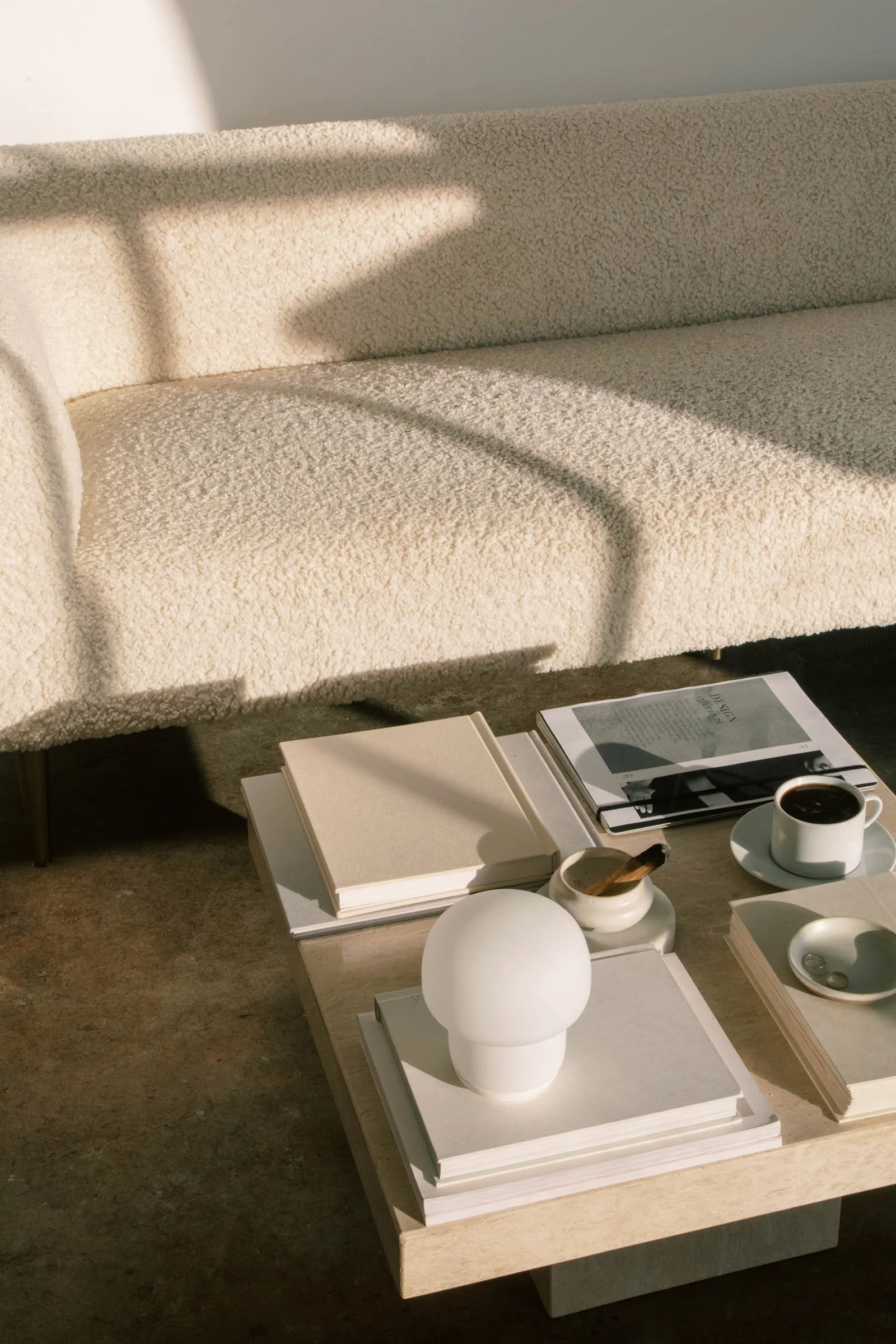
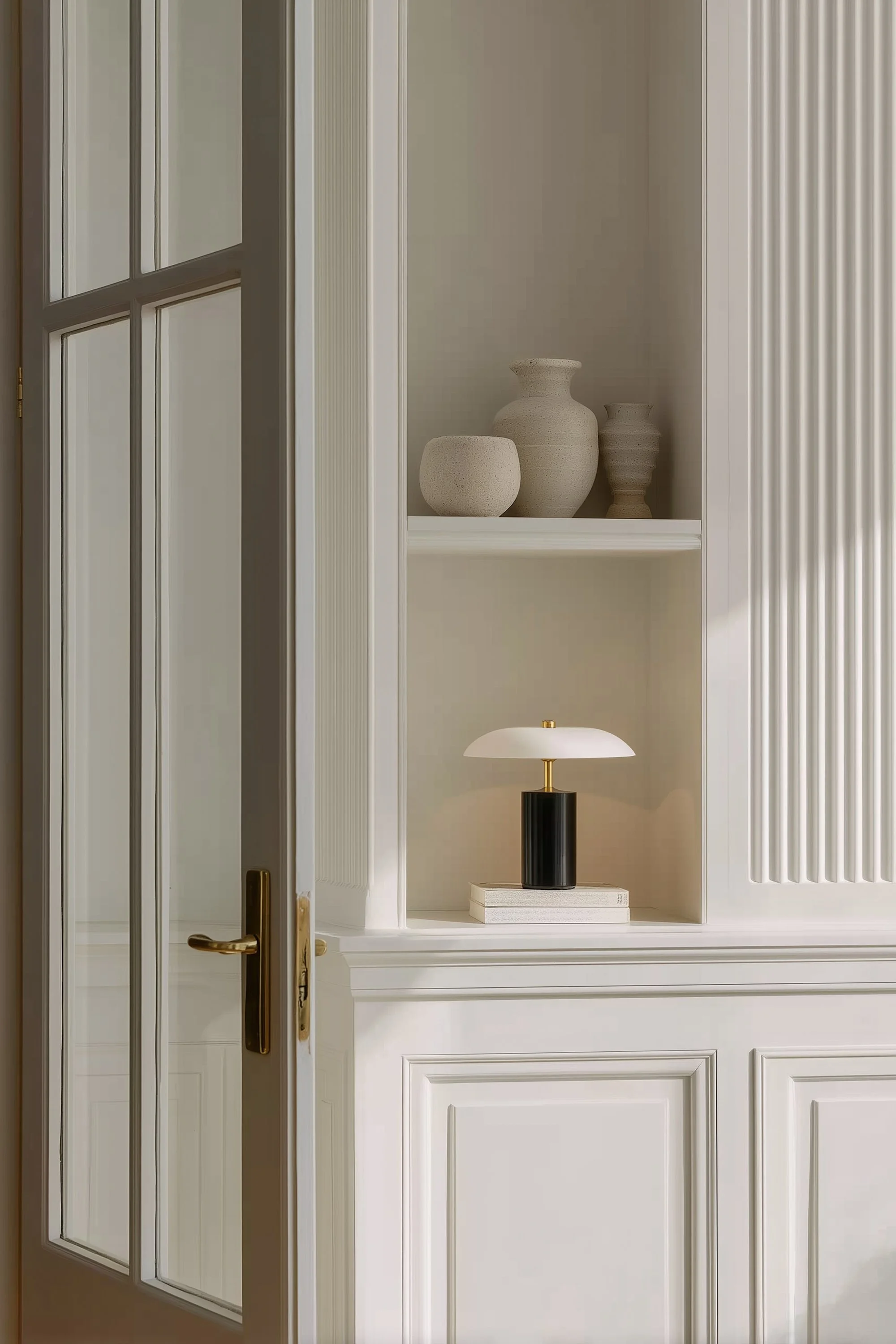
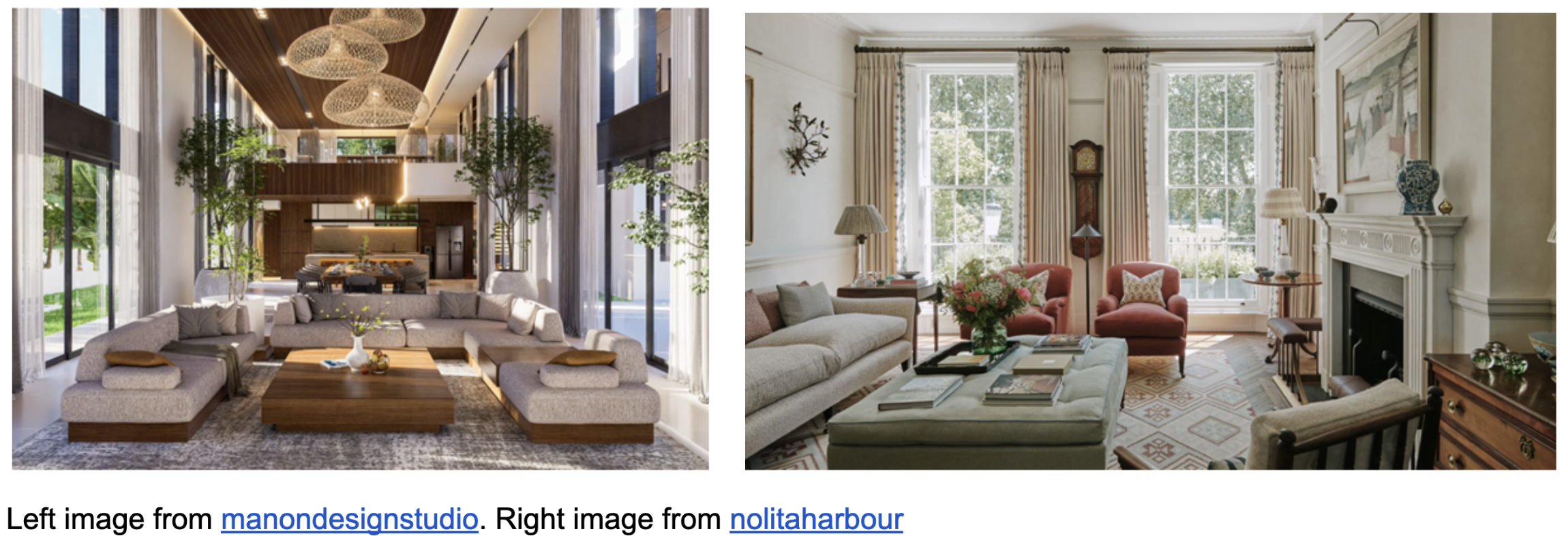
Besides the Golden Proportion, and some general rules-of-thumb (such as the suggestion above that wall art exceeds half the width of the furniture below it) there are no hard-and-fast mathematical equations that aid a designer in the application of proportional relationships. Designers typically evaluate proportions using a combination of visual intuition and a keen sense, as well as the more formal approach of analyzing study drawings to discern the most ideal proportions for a space. However, real artistry lies in creating harmonious and sometimes unexpected relationships. Good proportions are often achieved by balancing the "volume" of the air with the scale of the furniture, as shown in the beautiful images below.
When To Break The Rules
Artists and designers often break the rules of scale and proportion to create memorable design features. This outdoor restaurant at the Mondrian Hotel in Los Angeles, designed by Philippe Starck, illustrates a deliberate exaggeration of scale through oversized flower pots.

This deliberate exaggeration of scale creates an environment that is whimsical and fanciful, and fun to be in.
Ultimately, mastering scale and proportion is about understanding the "why" behind what looks good so you can make intentional choices. A discerning eye is key to creating environments that capitalize on interesting proportional relationships. Whether you are carefully aligning artwork to furniture, or boldly subverting expectations with oversized elements like Starck’s flower pots, these relationships transform a mere collection of objects into a cohesive, harmonious environment that feels both grounded and inspired.
Sources used:
Lauer, D. A., Pentak, S. (2012) Design Basics 9th ed., Cengage Learning
Additional Resources

Want The Design Brief® delivered straight to your inbox?
If you liked this email, be sure to sign up for The Design Brief®, our complimentary publication that gives you bite-sized lessons on all the technical interior design topics you didn’t learn (or forgot) from design school—straight from our resident tenured interior design professor!